|
Know what’s happening across Oceania—before your coffee’s cold.
TODAY IN OCEANIA
Today is Special Education Day!
Special Education Day, observed on 2 December, highlights the importance of providing tailored learning support to students with disabilities to ensure they access education on an equal basis. It emphasizes effective teaching methods, resources, and inclusion—every child can learn and thrive when given the right support.
|
OCEANIA MARKETS
|
S&P/ASX 200
|
8,573.90
|
-0.47%
|
|
|
S&P/NZX 50 Index Gross
|
13,449.38
|
-0.29%
|
|
|
SPX STRI Fiji
|
9809.02
|
+0.23%
|
|
ASX 200 and NZX 50 Data Provided By:

|
|
*Market index data sourced from official exchange publications and financial data aggregators. ASX and NZX data reflect end-of-day figures from the Australian and New Zealand stock exchanges respectively. SPX (South Pacific Stock Exchange) figures reflect the most recent published data. Note: NZX and SPX figures include dividends (total return), while the ASX figure reflects share price movement only.
|
|
REGIONAL NEWS
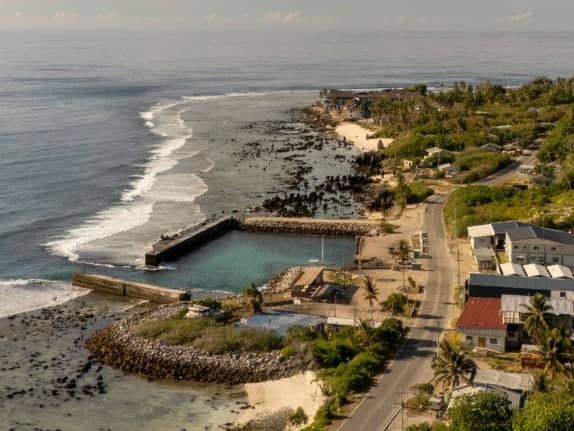
Nauru’s deferral of OECD Official Development Assistance graduation to 2027 reflects recognition of small island vulnerability alongside high-income status.
Nauru's OECD Official Development Assistance Graduation Deferred to 2027
|
Nauru's graduation from the Organisation for Economic Co-operation and Development (OECD) Development Assistance Committee (DAC) list of Official Development Assistance (ODA) recipients has been postponed to January 1, 2027. Originally scheduled for 2026, the deferral follows a three-year period during which Nauru's Gross National Income per capita exceeded the high-income threshold. However, the OECD is revising graduation criteria to include the Multidimensional Vulnerability Index (MVI), which accounts for vulnerabilities typical of small island developing states like Nauru.
|
|
This delay aligns with deferred graduation reviews for other countries such as Palau, Guyana, and Panama, while allowing Nauru continued access to concessional aid vital for climate adaptation, health services, and infrastructure development. Nauru's economy, with a population of about 12,000, faces structural challenges including phosphate resource depletion and exposure to climate risks, which the traditional high-income metric alone does not reflect. Australian aid supports Nauru through this transitional period, focusing on economic resilience and governance.
|
|
The OECD's ongoing reassessment aims to improve fairness in aid allocations by balancing income data with vulnerability factors. For Nauru, the additional time preserves critical development funding while the country prepares for eventual graduation under updated criteria that better capture its unique challenges as a small island state.
|
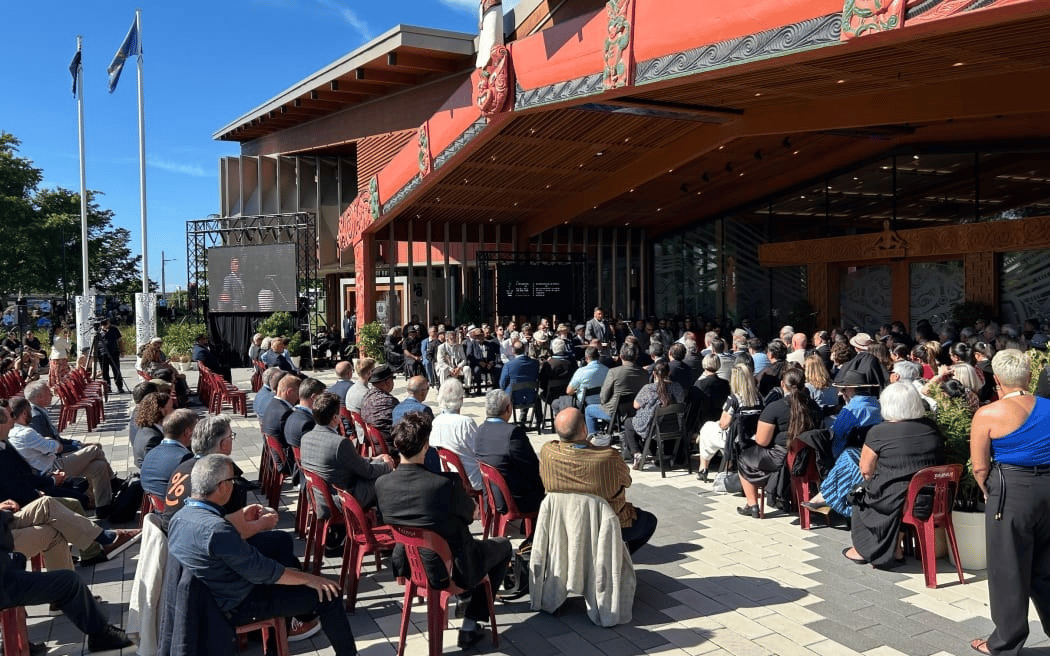
Māori Queen Te Arikinui Kuini Ngāwaihono i te pō launches the Kotahitanga Fund at the Economy to the World summit in Hamilton, pooling at least $100m in Māori capital for tribal-led global investment. Photo credit: Tuwhenuaroa Natanahira / RNZ
Māori Queen Launches Kotahitanga Fund
|
Māori Queen Te Arikinui Kuini Ngāwaihono i te pō launched the Kotahitanga Fund, a Māori-owned investment platform targeting at least NZ$100 million in seed capital from tribes and Māori enterprises to enable larger collective investments. The announcement came at the first Economy to the World Māori Economic Summit in Hamilton, where the fund aims to pool resources for deals too large for individual groups. It supports growth of the estimated NZ$126 billion Māori asset base through joint rather than separate efforts.
|
|
The summit attracted 170–200 delegates, including tribal leaders, Māori business owners, and representatives from global sovereign wealth funds handling US$8–10 trillion in assets. Speakers like former Reserve Bank governor Adrian Orr and former Air New Zealand chief executive Greg Foran addressed capital flows, indigenous wealth, and partnerships, with an expo displaying over 100 Māori enterprises and 158 meeting grounds and businesses from the Tainui federation. The fund connects this interest to Māori-led deals that provide commercial returns alongside long-term benefits for families and communities.
|
|
Te Arikinui attributed the fund's origins to the late King Tūheitia, first raised in her annual gathering speech in September to advance Māori economic independence. Ngāi Tahu chair Justin Tipa called it a method to combine Māori capital, allowing tribes and small businesses to draw global investors. The International Forum of Sovereign Wealth Funds viewed the fund and summit as examples of indigenous groups pursuing financial autonomy worldwide.
|
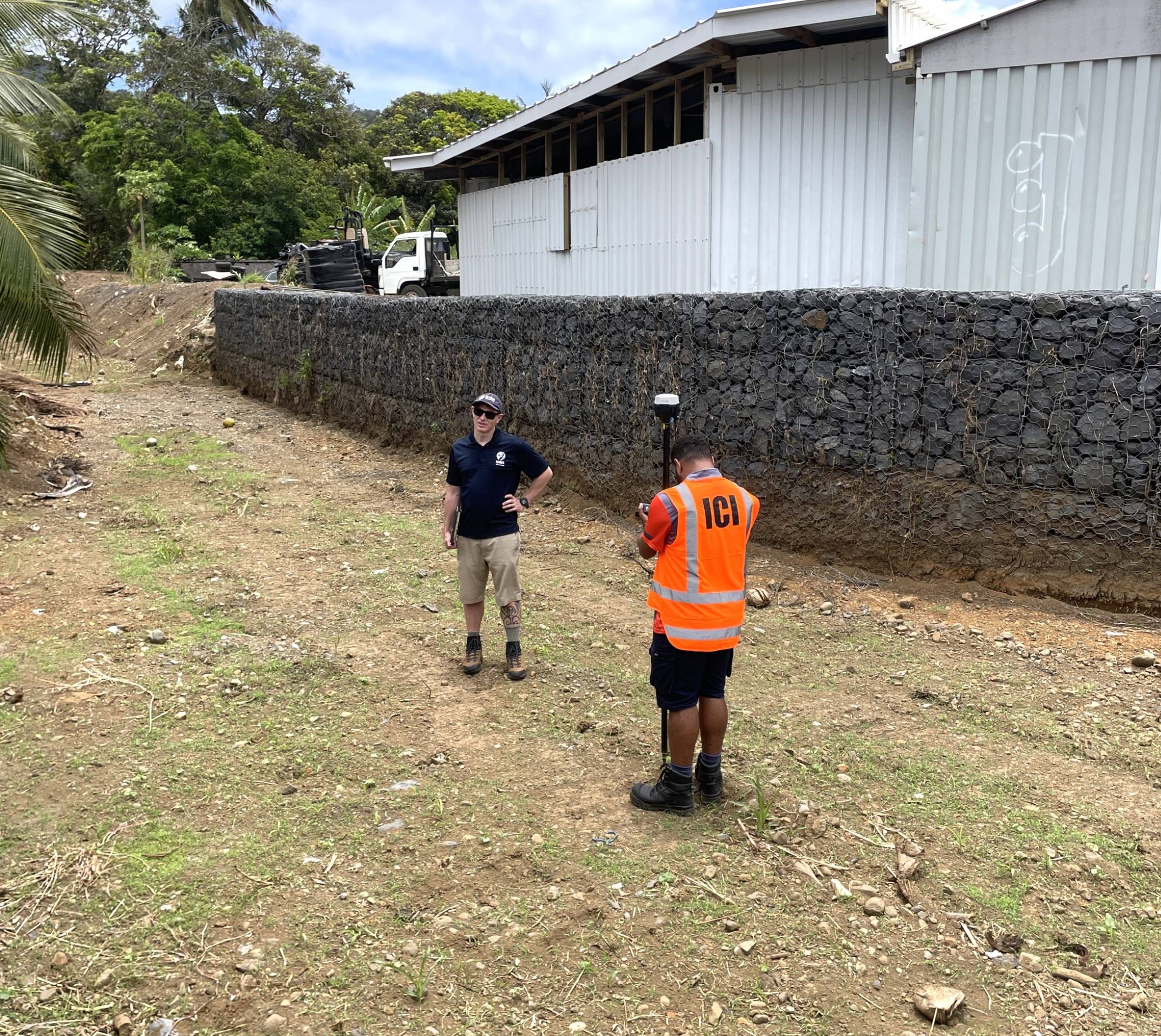
Infrastructure Cook Islands, Climate Change Cook Islands, and Earth Sciences New Zealand teams survey Rarotonga drainage systems to support flood hazard mapping project. Photo credit: Cook Islands News
Flood Mapping Project Begins on Rarotonga to Improve Climate Resilience
|
A flood hazard mapping project has started on Rarotonga to model and map areas most at risk of flooding. This initiative aims to provide detailed flood hazard zone maps that will support island planning, disaster preparedness, and climate adaptation decisions. The mapping integrates digital elevation models, rainfall, storm tides, and projected sea-level rise data to identify vulnerable communities and infrastructure.
|
|
The project forms part of broader efforts in the Cook Islands to strengthen resilience against increasingly frequent and severe weather events driven by climate change. The latest national snapshot highlights priorities such as water security, invasive species control, and environmental conservation alongside disaster risk reduction. Real-time geographic information systems developed through this and related programs assist in emergency response coordination, evacuation planning, and long-term infrastructure development.
|
|
A key aspect involves community engagement, ensuring local knowledge informs solutions and improves awareness of flood risks. Outputs such as hazard maps and data dashboards will guide government agencies, island councils, and residents in preparing for and mitigating flood impacts. This flood mapping project will also complement ongoing efforts to improve early warning systems, including the phased deployment of enhanced weather monitoring technologies.
|
Vanuatu Trains Staff for Local Metarhizium Production Against Coconut Rhinoceros Beetle
Training on Metarhizium production in Port Vila equips Vanuatu staff to combat CRB on Efate, with lab operational by December 2025.
|
Vanuatu's Biosecurity Division is training staff in Port Vila to produce Metarhizium fungus locally, targeting the coconut rhinoceros beetle (CRB), which damages coconut palms by boring into crowns and killing fronds. Two scientists from New Zealand's AgResearch delivered the session on mass production techniques, with a dedicated lab set for completion in early December 2025. The fungus infects beetle larvae in breeding sites like compost and mulch piles, reducing populations when applied consistently alongside pheromone traps and sanitation.
|
|
CRB-S (clade II) arrived on Efate in 2019 from Papua New Guinea's Bismarck Archipelago, spreading to half the island, while CRB-G (clade I) appeared in 2021 near Port Vila's seaport. Current controls use imported Malaysian Metarhizium in traps, showing high infection rates on Efate and Ifira, supported by the Pacific Community's PARC project funded by New Zealand. Local production will enable bulk supply for delimiting surveys on outer islands and targeted management sites under the Ministry of Agriculture's plan.
|
PRESENTED BY LANI MOKOSOI
FILMING IN FIJI?

|
I’ve spent more than two decades working in Fiji’s film industry, and I know how to get things done on the ground. Whether you need locations, approvals, transport, or crew, I’ll make sure your production runs seamlessly.
|
|
I’m here to take the stress out of filming in Fiji — so you can focus on the creative work.
|

Credit Bank's financial support helps Buk bilong Pikinini deliver literacy and early childhood education programs, reaching thousands of children across Papua New Guinea. Photo credit: PNG Haus Bung
Credit Bank Supports Literacy and Early Childhood Education in PNG
|
Credit Bank has provided K25,000 ($8,975 AUD) in funding to Buk bilong Pikinini (BbP), an organisation focused on improving literacy and early childhood education across Papua New Guinea. This support enables BbP to securely store and manage reading books, teaching resources, and essential learning materials. The funding helps maintain the delivery of quality literacy programs and after-school activities, allowing thousands of children throughout PNG access to learning opportunities daily.
|
|
BbP offers guided reading sessions, literacy-based activities, and learning spaces designed to nurture a love for reading and learning from an early age. Executive Officer Leanne Resson highlighted that the partnership strengthens their capability to distribute materials to library learning centres and schools nationwide. Credit Bank CEO Danny Robinson emphasised the bank's commitment to supporting initiatives that give children access to safe learning environments and the resources necessary for their development and success.
|
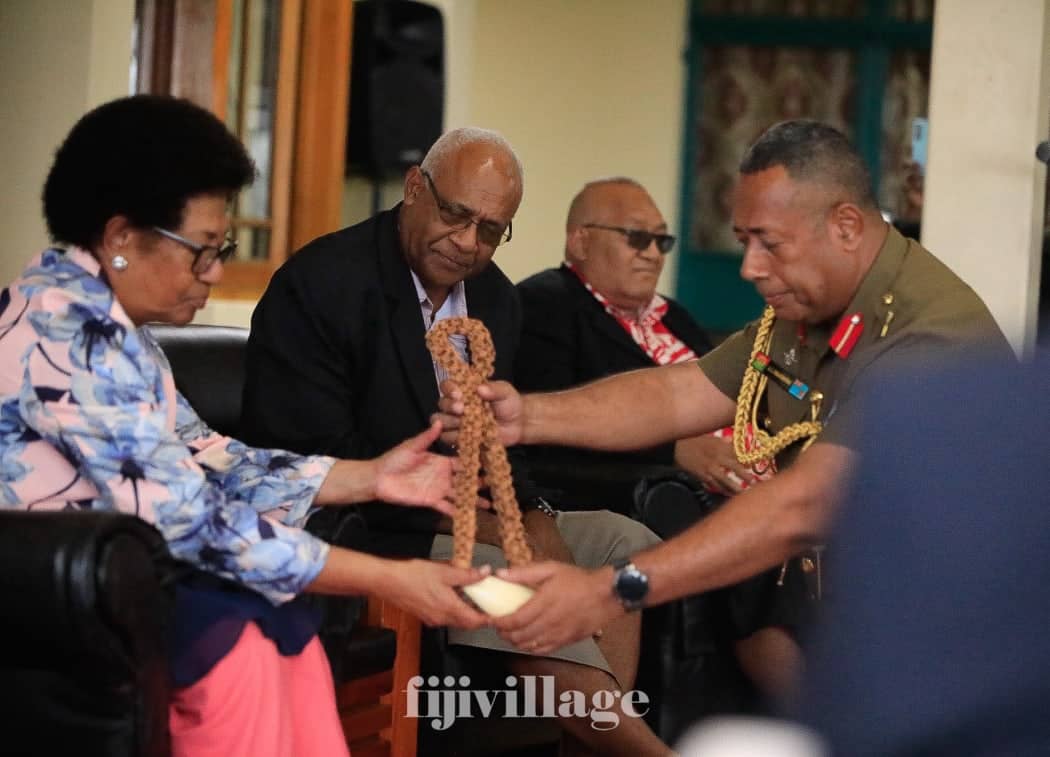
RFMF commander Jone Kalouniwai presents matanigasau to high chief Ro Teimumu Kepa at Queen Elizabeth Barracks, addressing military involvement in Fiji's coups. Photo Credit: fijivillage.com
Fiji Military Issues Traditional Apology to Great Council of Chiefs
|
Republic of Fiji Military Forces (RFMF) commander Major General Jone Kalouniwai presented a matanigasau, Fiji's highest traditional apology, to the Great Council of Chiefs (GCC) at Queen Elizabeth Barracks in Suva on November 26, 2025. The ceremony addressed the military's role in four coups since 1970, including the 1987 coups led by current Prime Minister Sitiveni Rabuka and the 2006 coup under Frank Bainimarama, which abolished the GCC. These events, driven by ethnic nationalism and government-military conflicts, cost Fiji billions in economic losses according to successive governments.
|
|
High chief Ro Teimumu Kepa, a former opposition leader and GCC member, accepted the apology on behalf of the council, flanked by former President Ratu Wiliame Katonivere and GCC chair Ratu Viliame Seruvakula. Kalouniwai acknowledged the military's divergence from its purpose, particularly the 2006 GCC removal described as condescending, and committed to upholding civilian supremacy to break the cycle of interventions. Ro Teimumu urged the military, as "sons and grandchildren" of the chiefs, to protect the nation and avoid repeating past events.
|
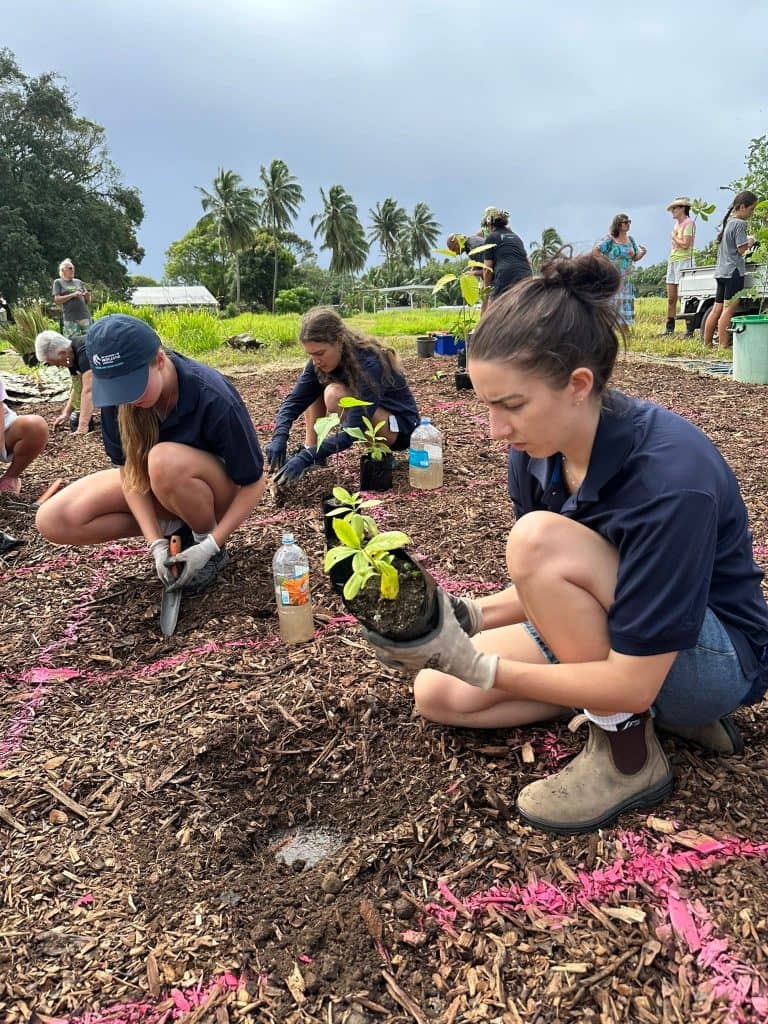
University of Newcastle students join local efforts by planting native trees for the Cook Islands’ first Tiny Forest above Parengaru Stream, aiming to restore stream health and boost biodiversity.
Photo credit: Cook Islands News
Tiny Forest Project Aims to Restore Stream Health and Biodiversity on Rarotonga
|
The Cook Islands National Environment Service (NES), along with community partners, has launched the islands' first Tiny Forest initiative along the banks of Parengaru Stream in Rarotonga. This small-scale, dense planting of native trees aims to restore riparian zones, improve stream water quality, and strengthen biodiversity resilience in the face of habitat loss and climate pressures. The project draws on nature-based solutions proven globally to benefit ecosystems through enhanced soil retention, nutrient absorption, and wildlife corridor restoration.
|
|
The Tiny Forest forms part of NES’s Project ENUA, a catchment restoration and environmental resilience program. Community involvement includes tree propagation, planting days, and education to raise awareness on ecosystem services and climate adaptation. The initiative targets fragmented forest patches to reconnect habitats, reduce sedimentation, and support native species recovery. Additionally, it complements Cook Islands efforts to combat invasive species, protect freshwater resources, and build resilience against increasingly frequent extreme weather events.
|
|
This localized ecological restoration is supported by partnerships with groups like Muri Environment Care, local nurseries, and conservation science experts. On November 22, more than 30 volunteers, including University of Newcastle students, planted 600 native trees and shrubs. It highlights the growing role of community-led projects in sustainable island development and climate resilience strategies, providing actionable models for other Pacific island states facing similar environmental challenges.
|
Vanuatu Airport Agencies Adjust Schedules to Reduce Congestion
Adjusted flight schedules at Port Vila International Airport stagger arrivals to ease peak congestion, with terminal upgrades planned for December 2025.
|
Airports Vanuatu Limited (AVL), Civil Aviation Authority of Vanuatu (CAAV), and Department of Tourism have adjusted international flight arrival and departure times at Port Vila International Airport, effective November 2025, to stagger peak periods and cut passenger crowding. These changes follow traveler complaints on social media and at the terminal about long queues during high-traffic hours. Ongoing coordination meetings with airlines and stakeholders will monitor flight volumes and enforce the new timetable.
|
|
AVL plans terminal upgrades including toilets, waiting areas, and air circulation, staged to avoid disruptions, with the Ministry of Infrastructure leading procurement through the Public Works Department; tenders close mid-December 2025. Similar work is queued for Santo Airport. The measures support tourism, which relies on efficient arrivals, while broader aviation investments target runway rehabilitation, apron extensions, and air traffic control equipment under the Pacific Aviation Investment Programme.
|
PRESENTED BY VONU STUDIOS
Children's Book: Vonu and the Druas Play Hide and Seek

|
Join Vonu the turtle and the stingray twins, the Druas Vai and Fai, in an exciting game of hide and seek! A heartwarming story filled with fun and adventure, perfect for young readers. Get your copy today!
|
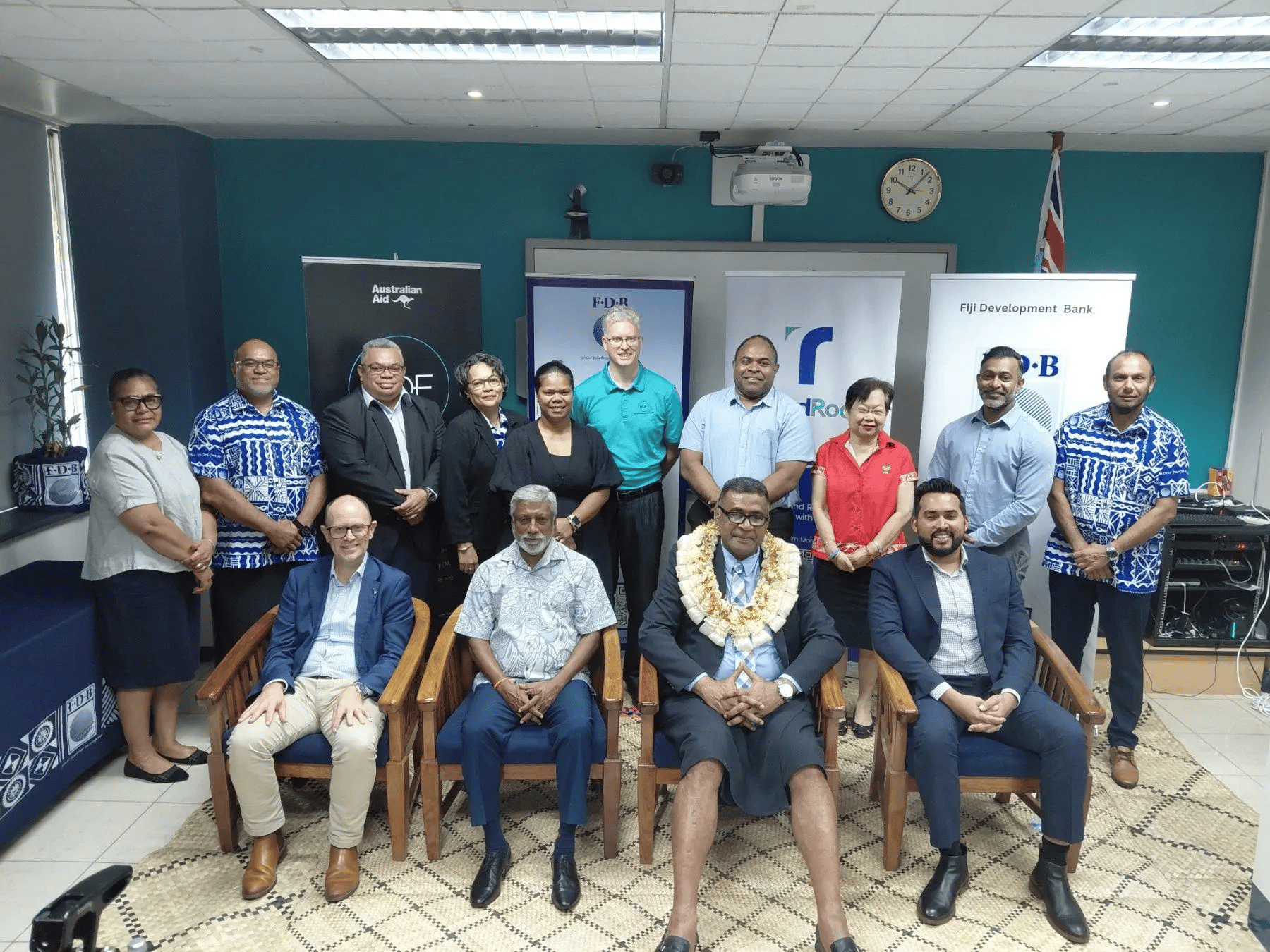
Finance Minister Esrom Immanuel at Fiji Development Bank's AI credit tool launch, aimed at unsecured loans up to $10,000 for existing customers. Photo credit: Kaneta Naimatau / Fiji Sun
Fiji Development Bank Launches AI Credit Assessment Pilot
|
Fiji Development Bank launched an AI-assisted credit assessment tool on November 13, 2025, in Suva, targeting existing customers for faster loan processing. The 12-month pilot assesses unsecured loans up to $10,000 and secured loans up to $100,000 via the bank's mobile app and web platform. It analyzes behavioral data like sales patterns, WhatsApp, and Viber interactions alongside bank records to generate preliminary assessments, with final decisions by credit officers.
|
|
Finance Minister Esrom Immanuel stated the system addresses barriers for Fijians lacking traditional collateral or documentation, supporting women, youth, entrepreneurs, and small businesses. FDB CEO Filimone Waqabaca noted customer feedback on slow turnaround times drove the initiative, which aligns with Fiji's National Development Plan and Digital Strategy 2025-2030. Developed by Melbourne-based Third Roc with Market Development Facility support, phase two will extend to new customers nationwide.
|
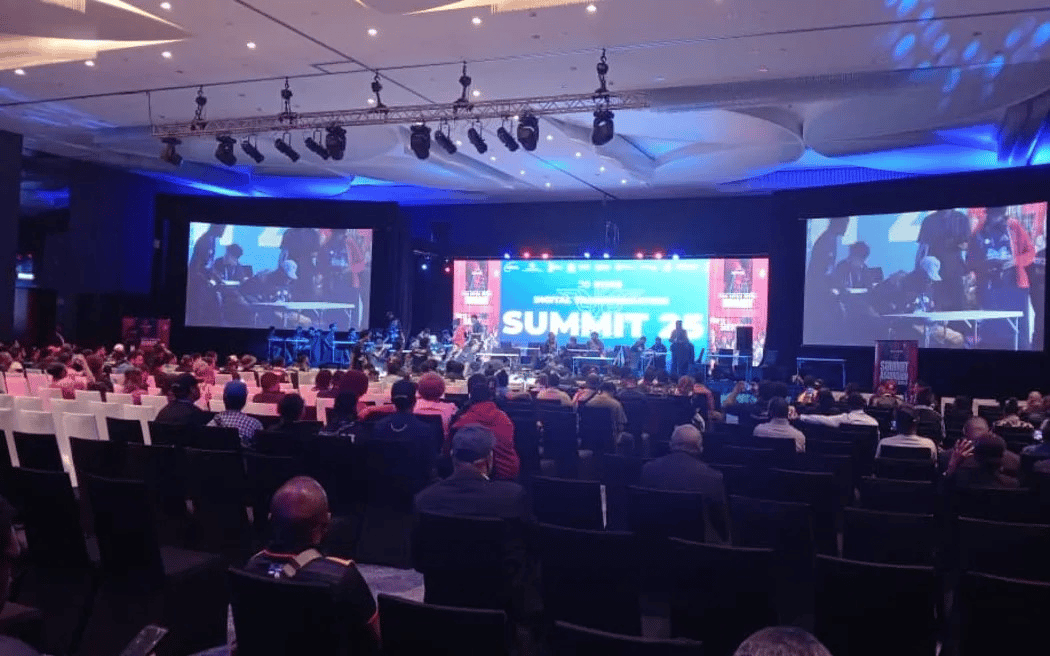
Nearly 1,100 participants at PNG Digital Transformation Summit 2025 in Port Moresby discuss SevisPass digital ID rollout and government digitization policies. Photo credit: Scott Waide / RNZ
PNG Digital Transformation Summit Focuses on Reforms
|
Papua New Guinea's Digital Transformation Summit, held November 24-27 at the Stanley Hotel in Port Moresby, drew nearly 1,100 participants including government leaders, provincial administrators, tech firms like Oracle, Google, AWS, and SpaceX, and over 300 Digital Transformation Officers tasked with local implementation. Prime Minister James Marape opened the event, stating ICT and AI will drive the next 50 years of development under the Reset PNG@50 agenda, emphasizing accountability through digital systems to reduce corruption via audit trails and automated processes. Secretary Steven Matainaho noted the summit's record attendance and focus on tools like SevisPass digital ID, which pilots include Port Moresby city pass, public sector credentials, MiBank account openings, and civil service e-recruitment.
|
|
The government has enacted the Digital Government Act 2022, Digital Transformation Policy 2020, National Cyber Security Policy, Government Cloud Policy, and Data Governance Policy to support interoperability and secure data handling across public bodies. Sessions covered AI, cloud services, 5G rollout, cybercrime prevention, digital payments, and PNG's hydro and geothermal resources for data centers, alongside youth hackathons, coding competitions, and content creator panels. Full SevisPass rollout via SevisDeck is set for March 2026, with features like residence pass and e-government portal launching before Independence Day in September 2025.
|
|
Challenges include uneven internet coverage, varying digital literacy, stretched public capacity, and building trust in digital ID after service dissatisfaction. Marape urged adoption of secure platforms despite hurdles, with international partners aligning on standards and privacy. The summit ended with partnership agreements and awards celebrating PNG's 50th independence anniversary.
|
Vanuatu Government to Prioritise Serious Farmers in 2026 Livestock Plan
Vanuatu's 2026 livestock plan targets committed farmers to boost production and food security through policy support and market development.
|
The Vanuatu government announced that its 2026 livestock development plan will focus support on "serious farmers" who demonstrate commitment and capacity to scale operations. This approach aims to revive livestock production, particularly cattle, pigs, chickens, and goats, to improve local food security and economic growth. The Ministry of Agriculture highlighted obstacles such as declining cattle numbers and the loss of beef export facilities.
|
|
The plan supports both smallholder and commercial livestock farming through government incentives, land leases, restocking programs, and training on animal welfare. Efforts include better management of arable land, promotion of organic and free-range farming, and establishing market access for premium products. The government seeks to align policies with the National Sustainable Development Plan and prepare a roadmap for donor funding support by early 2026.
|
|
This policy framework aims to increase rural household incomes, food security, and employment while addressing environmental sustainability. Recognising farmers with clear criteria will guide targeted assistance including pasture establishment, fencing, and water access to strengthen the sector's commercial viability.
|
SPOTLIGHT
Marshall Islands Launches World’s First Crypto-Based Universal Basic Income Program
 Marshall Islands pioneers a universal basic income program using the US dollar-pegged digital stablecoin USDM1 delivered via the government’s Lomalo digital wallet, expanding financial access for over 33,000 citizens.
|
The Republic of the Marshall Islands has introduced a universal basic income (UBI) system where all citizens receive US$800 annually, paid quarterly through a government-issued digital stablecoin called USDM1. This stablecoin is pegged to the US dollar to maintain stable value. The government launched a digital wallet named Lomalo for citizens to access their payments digitally, bypassing the need for traditional bank accounts and ensuring wider financial inclusion, especially in remote areas.
|
|
Payments under the program can also be received via physical checks or direct bank deposits. In addition to regular UBI payments, the scheme offers larger sums to individuals facing extraordinary circumstances such as food insecurity or housing challenges. The policy aims to make household spending on essentials like food, transport, and shelter more predictable and secure. With the Marshall Islands’ GDP per capita at roughly $5,800, this UBI represents an increase of about 13-14% in average annual income.
|
|
The government’s plan combines blockchain technology with sovereign fiscal policy, marking an unprecedented use of digital currency in this context. Nonetheless, the International Monetary Fund (IMF) has raised concerns over risks involved with digital assets and urged caution. The Marshall Islands’ approach tests the potential of digital stablecoins to drive financial inclusivity in small island economies where traditional banking is limited.
|
|
The Lomalo wallet system’s flexibility allows users to transfer funds to other registered users, enabling peer-to-peer transactions within the country. Initial disbursements began in late November 2025, with ongoing enrollment for citizens to register for the UBI and digital wallet. The government highlights that this approach could serve as a case study for similarly structured economies looking to leverage digital assets in social welfare distribution.
|
|
This UBI program is financed partly through a tokenized bond initiative, where the government issues high-grade asset-backed bonds to fund the digital currency supply. Yield from these assets supports bond redemption and UBI payments, integrating emerging financial instruments with public social programs.
|
|
The Marshall Islands’ crypto-based UBI responds to challenges like limited banking infrastructure and aims to foster greater economic stability at the household level. The government's use of blockchain payments directly to citizens addresses financial service accessibility while aiming to stimulate consumer spending on basic necessities.
|
|
|
Help Us Improve The Oceanian
We’d love to hear your thoughts—reply to this email and tell us what you enjoyed or want more of.
|
QUICK TAKES
- Vanuatu plans to establish the Vanuatu Competition and Consumer Commission as part of national trade reforms, with a workshop held on November 22, 2025, at the GNBS Training Room training 24 participants from government agencies and businesses. The commission will promote market competition, protect consumers, and enforce fair trading practices, building on earlier draft policies developed with assistance from the Pacific Private Sector Development Initiative. This follows Vanuatu's 2016 Competition and Consumer Protection Policy and aims to address market barriers in key sectors.
|
FUNDING OPPORTUNITIES
-
NZ Film Industry Development Funding
|
The New Zealand Film Commission (NZFC)
is offering Industry Development Funding to support New Zealand screen sector organisations, companies, or collectives in delivering programmes that develop craft and practice within the film industry.
|
|
Key Details:
-
Purpose: To foster skill development, project initiatives, and talent within the New Zealand film sector.
-
Eligibility: Open to New Zealand-based screen organisations, companies, or collectives registered in New Zealand.
Funding Strands:
-
Strand 2 (up to $30,000): Applications opened on Monday, July 14, 2025 and remain open until June 30, 2026, or until funds are exhausted.
How to Apply: Applications are submitted via the NZFC's online application portal.
For full details on application criteria and guidelines, please visit the official NZFC website:
Industry Development Funding.
|
Was this email forwarded to you? Sign up here:
|
|