|
Know what’s happening across Oceania—before your coffee’s cold.
TODAY IN OCEANIA
Today is World Origami Day!
World Origami Day celebrates the art of transforming a simple sheet of paper into something beautiful. It’s a reminder that with creativity and patience, even the simplest beginnings can unfold into something extraordinary.
|
OCEANIA MARKETS
|
S&P/ASX 200
|
8,825.30
|
+0.63%
|
|
|
S&P/NZX 50 Index Gross
|
13,574.64
|
-0.18%
|
|
|
|
ASX 200 and NZX 50 Data Provided By:

|
|
*Market index data sourced from official exchange publications and financial data aggregators. ASX and NZX data reflect end-of-day figures from the Australian and New Zealand stock exchanges respectively. SPX (South Pacific Stock Exchange) figures reflect the most recent published data. Note: NZX and SPX figures include dividends (total return), while the ASX figure reflects share price movement only.
|
|
REGIONAL NEWS
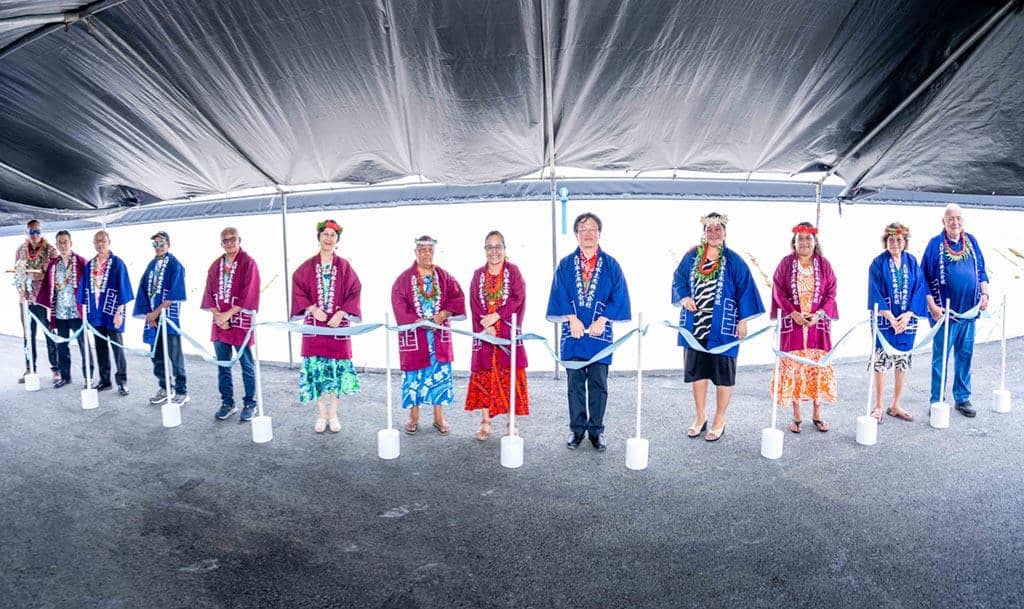
Marshall Islands Parliament rebuild, airport terminal, hospitals, and water reservoir among major developments. Photo Credit: Government of the Marshall Islands
Marshall Islands Advances Multiple Infrastructure Projects Worth Over $200 Million
|
Multiple construction projects totaling over $200 million are underway or in planning stages across the Marshall Islands, driven by funding from the United States, Taiwan, Japan, and the Asian Development Bank. Pacific International Inc., the only local construction firm with capacity for major projects, is managing most work. Two recently completed projects include an 11.5-million-gallon reservoir handed over October 22 that expanded water storage capacity by 30 percent—from 36 million gallons to 47.5 million gallons—critical for an atoll that depends on rain for 95 percent of its water supply. The $14 million facility was funded by Japan and built by Dai Nippon Construction with Pacific International as subcontractor. The other completed project is the $34 million repaving of the international airport runway funded by the U.S. Federal Aviation Administration's Airport Improvement Project, which included improvements to the apron and fuel facility.
|
|
Ground broke in early October on the new Nitijela parliament building after the original structure—which opened in 1993—was destroyed by fire around midnight on August 26. The fire engulfed the chamber, offices, library, and archives, with firefighters taking over an hour to reach the scene due to limited firefighting capacity. The US pledged $13 million for the rebuild, while Taiwan—which had already committed $33 million for a new capital building—is providing additional funding. The Cabinet fast-tracked parliament reconstruction ahead of the capital complex project. Pacific International retained both blueprints and "as built" drawings from the original 1993 construction, streamlining the rebuild process. Finance Minister David Paul noted the decision to use the same design.
|
|
Additional projects in planning include the Amata Kabua International Airport terminal, now in detailed design phase, which will replace the existing terminal that opened in 1952. The U.S. will fund a temporary terminal for passenger and cargo services during construction, which will later serve as the domestic terminal for Air Marshall Islands. Japan is funding the new international terminal, requiring Pacific International to perform significant landfill and land reclamation on the lagoon side to create an enlarged parking lot. New hospitals for Majuro and Ebeye are moving ahead with ADB expected to finance the work. Majuro hospital costs are estimated between $100 and $140 million, while U.S. Army Corps of Engineers estimated Ebeye hospital at over $300 million, though Finance Minister Paul believes both can be completed for $100 million and $50 million respectively. ADB already approved a $17 million grant for an Ebeye hospital upgrade, with discussions underway to reallocate funds toward a new facility. Paul indicated Compact funding for Kwajalein infrastructure development could match the ADB grant, with additional options including a 30-year concessional loan from ADB for up to $50 million and leftover infrastructure funds from the second Compact agreement that expired in 2023.
|
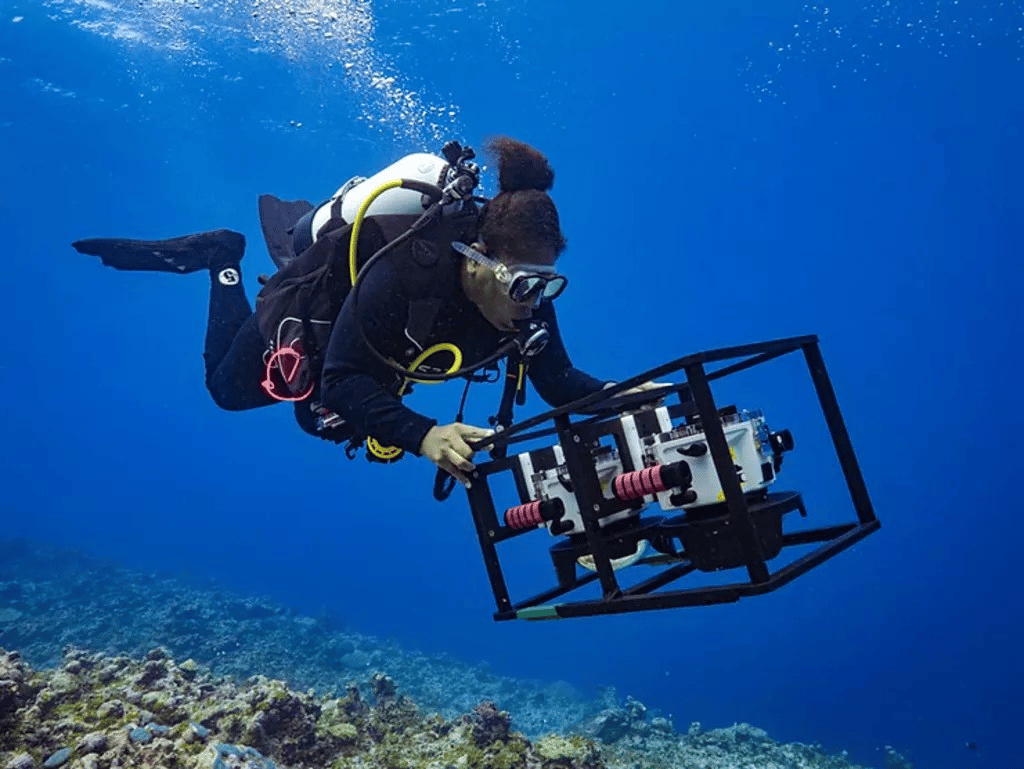
Nine-week expedition surveyed 270 sites across all 13 provinces, documenting nearly 500 fish species and revealing decline in reef systems exposed to overfishing and pollution. Photo credit: Joe Lepore / Waitt Institute
Fiji Releases First National Baseline Data on Coral Reef Health
|
Fiji's government released findings from the Blue Prosperity Fiji Ocean Science Expedition, a nine-week survey that assessed coral reef habitats at 270 locations nationwide and documented nearly 500 different fish species. The research, conducted from May to August 2023, represents the country's first national scientific baseline on coral reef health and involved consultations with over 100 traditional fishing ground owners before surveys began. Teams of divers collected data on coral reef health, fish populations, macroinvertebrates, and water quality, while also placing 88 temperature loggers across Fiji to track ocean temperatures over time.
|
|
The findings show some reef systems remain vibrant, but overall point to declining health in areas exposed to overfishing, land-based pollution, and climate change. The expedition was led by the Ministry of Fisheries with support from the Ministry of iTaukei Affairs, Ministry of Environment and Climate Change, and partners including the Waitt Institute and Blue Prosperity Fiji. Co-principal investigator Dr Joeli Veitayaki said the data provides the best nationwide understanding of Fiji's marine environment in over a century. The government plans to use the baseline data to inform its marine spatial planning and strengthen fisheries management across the archipelago.
|

Yellow crazy ants, spiders, and snails found on Seabee vehicles after years of use in Northern Marianas. Photo credit: Kuam news
Invasive Species Bypass Multiple Inspections on Military Equipment from Tinian
|
Department of Defense heavy equipment returning to Guam after several years conducting public works projects on Tinian arrived at the port Monday with multiple invasive species aboard, including yellow crazy ants, spiders, and Mexican amber snails. The vehicles were transported on open flatracks and should have undergone biosecurity inspections on Tinian before departure and upon arrival in Guam, but Port of Guam safety officers were the first to detect the pests Monday night. Guam's Biosecurity Division and Navy biosecurity personnel assessed the equipment and applied pesticide, then determined that two flatracks and their vehicles required fumigation before they could leave the port. Yellow crazy ants are already common on Guam, but the species sprays formic acid to blind and kill prey, can swarm in large numbers to kill lizards, frogs, small mammals, turtle hatchlings and bird chicks, and can reshape entire ecosystems.
|
|
The breach occurred amid expanding U.S. military activities on Tinian, which include plans for a new biosecurity facility, ammunition storage, radar infrastructure, and base camps that can support up to 1,000 personnel. The U.S. military and Commonwealth of the Northern Mariana Islands government formed a biosecurity working group in March 2025 to improve inspection procedures at the Tinian port. Tinian's Customs and Biosecurity intercepted two venomous black widow spiders and eggs aboard the vessel APL Islander approximately one week before the Guam incident. Christopher Rosario, Guam Department of Agriculture biosecurity chief, stated that the equipment had gone through many loopholes in the inspection process involving multiple agencies, and emphasized that invasive species can hide in nooks and crannies in vehicles, containers, and flatracks in both open and closed environments.
|
Australia Considers Road-User Charge for Electric Vehicles Amid Declining Fuel Excise Revenue
A shift in Australia's vehicle tax landscape as policymakers explore distance-based charges to maintain road funding while balancing fairness for electric vehicle owners.
|
Australia is examining the introduction of a road-user charge for electric vehicles (EVs) to compensate for the significant loss in fuel excise revenue as EV sales grow rapidly. In the 2024 financial year, fuel excise raised $15.71 billion, but it is expected to decline to zero by 2050 as electric vehicles replace internal combustion engine cars. The federal government’s economic roundtable is set to discuss this approach, with proposals centered on a distance-based charge for light EVs, which are currently exempt from fuel excise taxes. Several state governments, including New South Wales and Western Australia, have also proposed implementing such charges starting in 2027, despite some constitutional questions following a High Court ruling against Victoria’s similar charge in 2023.
|
|
The debate features differing opinions on who should bear the cost of road maintenance funding. Some advocate applying the road-user charge universally to all vehicles regardless of fuel type, referencing fairness and the growing number of light EVs on roads. Industry representatives and the Electric Vehicle Council warn against imposing additional costs solely on EV drivers at this early adoption stage, cautioning it could slow EV uptake, which is seen as a key strategy to reduce pollution. They stress that factors like improved petrol vehicle fuel efficiency have also contributed to reduced fuel excise revenue. Experts emphasize that any new charge should be fair, reflect emissions intensity, and be introduced only when EVs account for a significant share—around 30%—of new vehicle sales. This approach aims to balance road funding needs with encouraging cleaner vehicle choices.
|
|
Additionally, proponents suggest retaining existing fuel excise taxes on petrol vehicles as an emissions-based incentive while implementing a distance and weight-based road-user charge on all vehicles. This would result, for example, in an average annual charge of about $380-$400 based on typical yearly driving distances. The overall goal is to create a sustainable, equitable road funding system that supports transport infrastructure without unfairly burdening EV owners who already contribute through various taxes including registration, stamp duty, and electricity levies. The government has indicated it will carefully consider the timing and structure of any changes to ensure fairness and effectiveness.
|
PRESENTED BY VONU STUDIOS
PAWPAW KIDS ACTIVITY BOOK

|
FIJI PARENTS 🎉 Preschool & Kindergarten Activity Book! 🎉
Perfect for ages 3–6 💛
|
|
Looking for fun and educational activities for your little one? We’ve created a printable activity book filled with engaging worksheets for preschoolers and kindergarteners!🖍️✨
|
|
✅ Fun number & letter activities
✅ Coloring pages
✅ Tracing practice
✅ Matching games
✅ And more!
|
|
📌 Only $5 – once you buy it, it's yours to print as many times as you want for personal use. No need to wait for shipping!
|
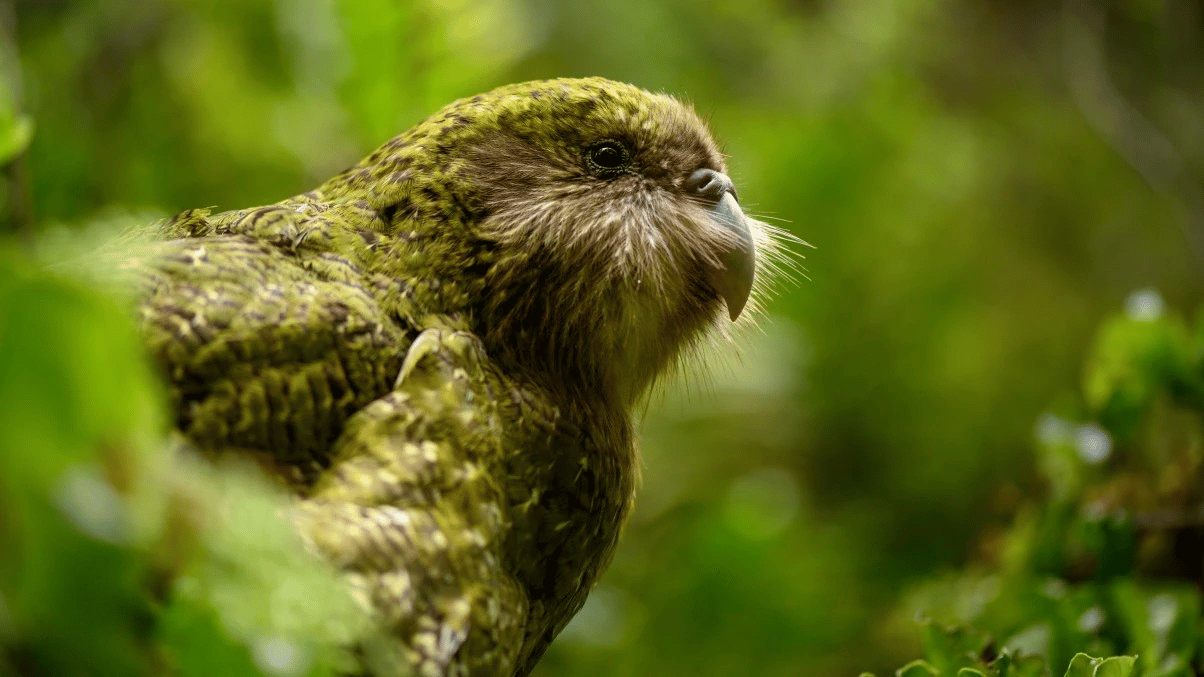
Flightless parrot species, decimated by introduced predators, now lives on four predator-free islands following relocation efforts that began in the 1970s. Photo credit: Jake Osborne, Kākāpō Ranger / Meridian Energy
New Zealand's Kākāpō Population Reaches 237 After Decades of Recovery Work
|
The kākāpō, a large nocturnal parrot weighing up to 4 kilograms, currently numbers 237 individuals as of October 2025, down slightly from a peak of 252 following bumper breeding seasons in 2019 and 2022. The species declined severely after European colonization brought stoats, rats, cats, and dogs to New Zealand, which hunted the ground-dwelling birds that had evolved without mammalian predators. By the 1970s, only a handful remained in Fiordland and on Stewart Island. Conservation teams relocated surviving birds to predator-free sanctuaries, and every living kākāpō except young chicks is now named, tagged, and monitored individually as part of the Kākāpō Recovery Programme.
|
|
The birds currently live on four small islands: Pukenui (Anchor Island) and Te Kakahu (Chalky Island) in Fiordland, Whenua Hou (Codfish Island) near Stewart Island, and Pearl Island, which serves as a holding area for non-breeding males. Kākāpō breed only every two to four years, triggered by fruiting cycles of rimu trees. In 2023, ten birds were released at Sanctuary Mountain Maungatautari in the first mainland reintroduction attempt. The main challenge facing the population is low genetic diversity due to inbreeding, as most current birds descend from a small number of founders. Conservation efforts now include genomic sequencing of nearly the entire population to guide breeding decisions and maintain population health.
|
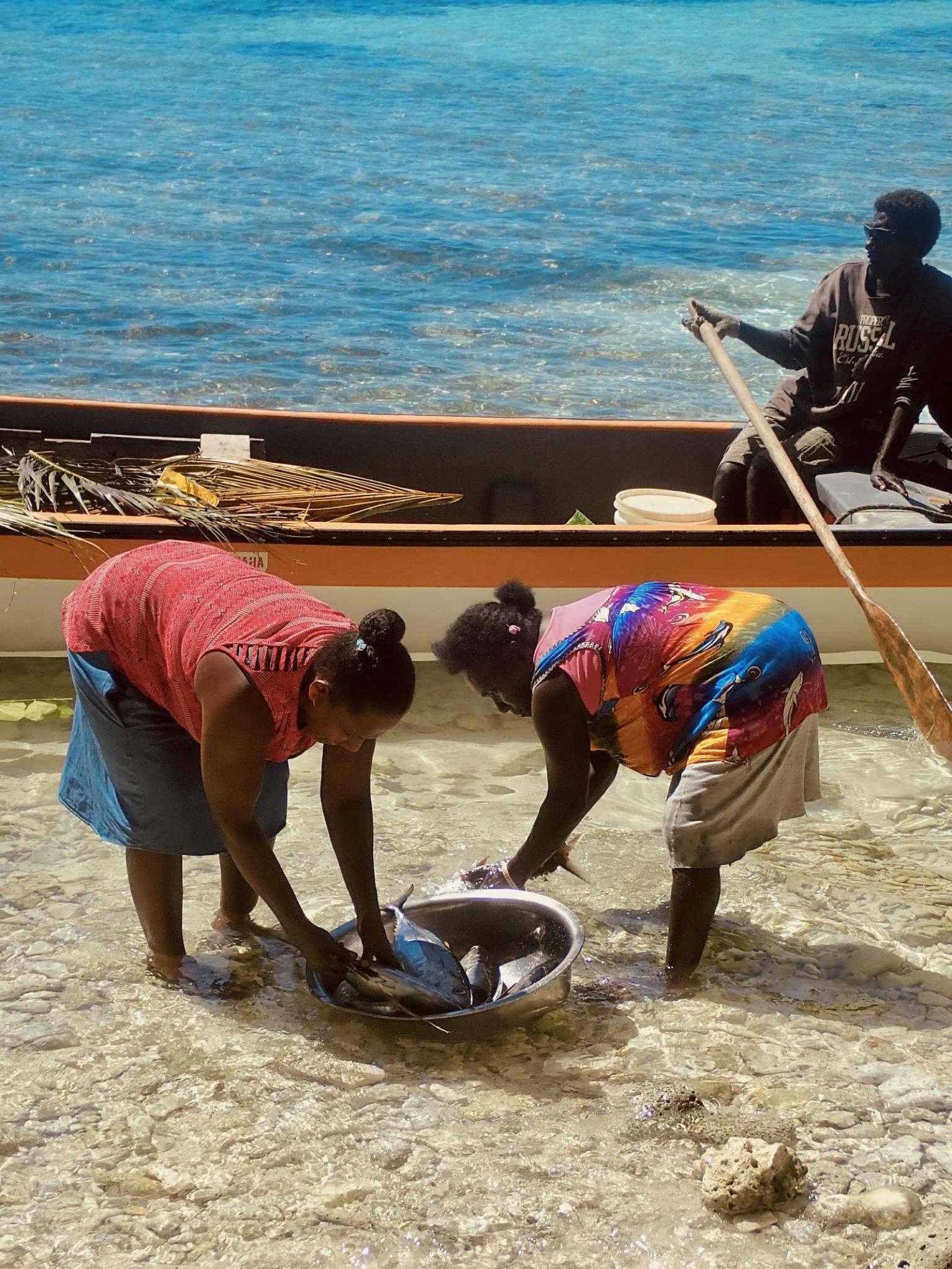
ACIAR-funded initiative will establish country's first spatial science degree program. Photo Credit: JCU / Bethany Smith
JCU Launches Five-Year Community Planning Project in Solomon Islands
|
James Cook University's Associate Professor Amy Diedrich is leading the Australian Centre for International Agricultural Research-funded Planning Future for Yumi project, which enables small-scale fishing and coastal communities in Solomon Islands to develop their own long-term plans rather than receiving top-down solutions. The five-year initiative brings together multiple Solomon Islands government agencies, Solomon Islands National University, and local organization Ecological Solutions Solomon Islands to address challenges including climate change and resource extraction. Diedrich noted that limited resources and isolation mean rural communities' perspectives often fail to reach decision-makers, and the project aims to build connections so community voices reach higher levels of governance.
|
|
A key component involves establishing Solomon Islands' first spatial science degree program in partnership with Solomon Islands National University, potentially providing a model for other Pacific nations. The program will build local scientific and planning capacity by training Solomon Islanders in geospatial technologies and spatial analysis methods used for land use planning, environmental monitoring, and resource management. The project takes a systems approach by examining how multiple environmental, social, and economic factors interact, helping communities develop plans that account for complex interdependencies rather than addressing issues in isolation. JCU has maintained research partnerships in Solomon Islands since at least 1999, with previous work including sustainable aquaculture development, coral reef fisheries governance networks, and tuberculosis prevention programs in East Kwaio.
|
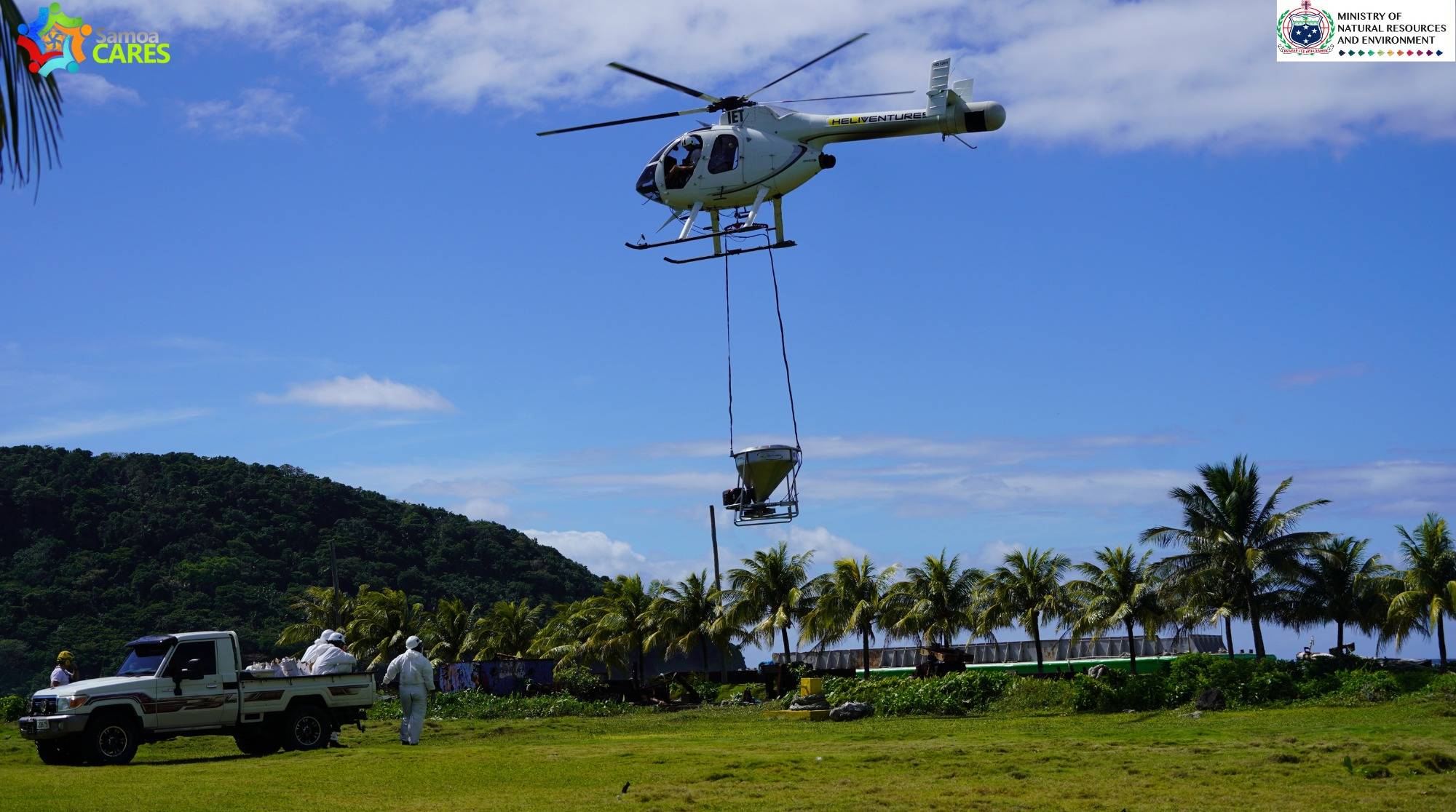
Helicopter operation targets invasive rodents following successful pig removal in multi-phase conservation project. Photo credit: Ministry of Natural Resources and Environment Samoa / Facebook
Samoa Completes Rat Eradication Phase on Nu'utele Island
|
The Ministry of Natural Resources and Environment completed helicopter-based rat eradication operations on Nu'utele Island, using brodifacoum pellet baits applied via aerial spreader systems to target the island's steep and inaccessible terrain. The operation represents the second phase of a broader invasive species removal project that began with feral pig eradication earlier in the year, following extensive community consultations with the Aleipata area. The islands host two species of fruit bats, coconut crabs and marine turtles including the most important nesting sites for hawksbill turtle in Samoa, and support populations of the friendly ground dove, making the conservation efforts critical for protecting these threatened species.
|
|
Nu'utele Island serves as one of Samoa's Key Biodiversity Areas, supporting endangered species including the friendly ground dove, hawksbill turtles, boobies, terns, and endemic plant species that have been threatened by invasive mammals. Once invasive mammals have been removed Nu'utele could provide a secure site for translocating threatened landbird species such as the Island Thrush and the Samoan white-eye. The project operates under the Pacific Regional Invasive Species Management Support Service (PRISMSS) Restoring Island Resilience program, with funding from New Zealand's Ministry of Foreign Affairs and Trade and UK International Development.
|
|
The conservation initiative aligns with Samoa's National Biodiversity Strategy and Action Plan and National Invasive Species Strategy, with officials noting that invasive species are the leading driver of biodiversity loss in the Pacific, with significant impact on ecosystem resilience leading to a loss of production in ecosystem services and reduced ability to adapt to climate change. A third helicopter operation is scheduled for later in August 2025, with the long-term goal of creating predator-free conditions that would allow native forest regeneration and provide secure habitat for species reintroduction programs.
|
PRESENTED BY VONU STUDIOS
Children's Book: Vonu and the Druas Play Hide and Seek

|
Join Vonu the turtle and the stingray twins, the Druas Vai and Fai, in an exciting game of hide and seek! A heartwarming story filled with fun and adventure, perfect for young readers. Get your copy today!
|

Vatican meeting builds on 1986 visit by John Paul II as climate concerns dominate discussion. Photo Credit: Vatican Media
Fiji President Extends Papal Invitation to Pacific Region
|
President Ratu Naiqama Lalabalavu met Pope Leo XIV at the Apostolic Palace on October 30 during his official visit to the Holy See, delivering a personal invitation for the pontiff to visit Fiji and the Pacific region. Fiji and the Holy See have maintained formal diplomatic relations since September 1978, focused primarily on religious matters. The meeting recalled Pope John Paul II's visit to Fiji in November 1986, when the Catholic leader addressed Catholics and other religious groups at the Archdiocese of Suva, which had been erected two decades earlier in 1966.
|
|
Discussions between the two leaders centered on moral, social, and environmental challenges facing the global community, with Pope Leo acknowledging the unique vulnerability of Small Island Developing States to climate change impacts. President Lalabalavu described Fiji's commitment to a "Drug-Free and Peaceful Pacific" as a moral duty grounded in faith and human dignity. Following the audience with Pope Leo, the Fijian president met with Cardinal Pietro Parolin, Holy See Secretary of State, for further talks on Fiji's socio-political situation, environmental protection, and the fight against transnational crimes. Pope Leo XIV began his papacy in May 2025 as the 267th pontiff of the Roman Catholic Church.
|
Palau Rejects US Deportation Proposal Despite Financial Incentives
|
The Trump administration has proposed sending up to 75 deportees to Palau, offering $100,000 per person plus law enforcement assistance to address drug smuggling—a total of $7.5 million. President Surangel Whipps Jr. supports continuing discussions, noting the deportees "have no criminal background other than potential criminal charges related to allegedly entering the U.S. illegally," but faces domestic opposition. Both the Palau Congress and Council of Chiefs have rejected the proposal twice. Senate President Hokkons Baules advised against proceeding "only because of the practical issues that the introduction of the refugees would raise in our society," while the Council of Chiefs expressed concern about turning Palau into "a dumping ground" and cited the need to preserve Palau as "a peaceful Pristine Paradise."
|
|
Palauans cited infrastructure constraints and unresolved domestic issues including high costs for food, water, power, and overcrowding in Koror. The proposal comes as the US has deported hundreds of migrants to El Salvador's maximum-security CECOT prison, where they are held under conditions criticized by human rights organizations. In March, the Trump administration invoked the 1798 Alien Enemies Act—previously used only during the War of 1812, World War I, and World War II—to deport 238 alleged Venezuelan gang members and 23 alleged MS-13 members, though government data showed only 32 of the 238 Venezuelans had US criminal convictions. Palau's 2009 experience with six Uyghur detainees from Guantanamo Bay—who received $93,333 per person but struggled with cultural integration and ultimately all left by 2015—informs current resistance to the proposal. Despite Whipps establishing a working group in October, critics maintain that as a sovereign nation, Palau can decline even US requests.
|
SPOTLIGHT
Pacific Community Opens Regions First CryoLab
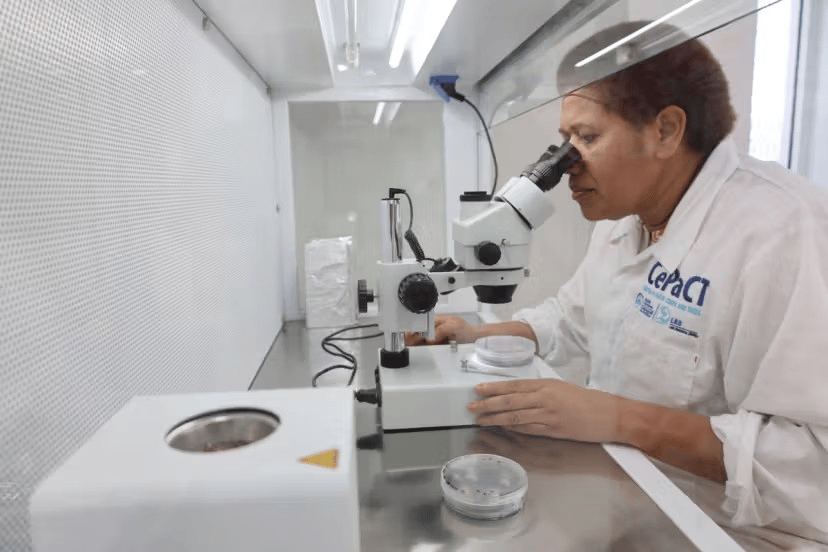
Facility in Narere, Suva triples storage capacity from 12,000 to 30,000 samples using liquid nitrogen at -196°C. Photo credit: Pacific Community (SPC)
|
The Pacific Community opened the region's first cryopreservation laboratory at its Centre for Pacific Crops and Trees in Narere, Suva. The facility stores plant samples at ultra-low temperatures—either immersed in liquid nitrogen at -196°C or in its vapor phase around -160°C—halting all metabolic and biochemical reactions to preserve genetic material for decades or centuries.
|
|
The lab nearly triples CePaCT's storage capacity from around 12,000 to about 30,000 samples. The facility will safeguard more than 2,000 plant varieties and over 100 crop and tree species collected over the past two decades, including taro, yam, banana, breadfruit, cassava, and coconuts. Cryopreservation removes all freezable water from tissues through physical or osmotic dehydration, followed by ultrarapid freezing to prevent formation of intracellular ice crystals that would cause cell death.
|
|
CePaCT was established in 1998 by the Pacific Community as the region's main genebank and holds over 2,000 varieties of Pacific crops. The taro collection is acknowledged as the largest in vitro collection in the world, consisting of over 850 varieties from Pacific and Asian countries. Cryopreservation is used primarily for crops with recalcitrant seeds like avocado and coconut, seedless crops such as banana and plantains, and clonally propagated crops including cassava, potato, and sweet potato.
|
|
Fiji's Minister for Fisheries and Forestry, Alitia Bainivalu, said CePaCT has served as "the regional custodian of our crop diversity, safeguarding the plants that feed us and shape our traditions". Deputy Director-General Paula Vivili noted the cryolab "secures our most important crops permanently, reduces costs over time, and enables faster recovery when disasters strike". Pitakia Tikai, a farmer from the Solomon Islands and Pacific Island Farmers Organisation Network member, said: "Our crops tell stories of knowledge, of shared farms and seeds passed from one generation to the next. With better tools like this lab, we can keep those stories alive".
|
MANUFACTURING
Guam Opens $40 Million 3D Printing Facility for Navy Submarine Parts
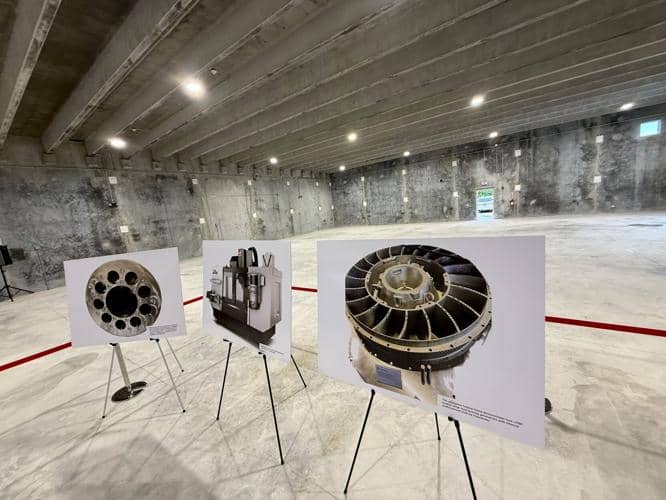 GAMMA factory aims to cut repair times from two years to two weeks with on-demand manufacturing. Photo credit: Guam Pacific Daily News
|
The Guam Advanced Material & Manufacturing Accelerator opened its 8,000-square-foot application center on November 7, establishing the first submarine parts manufacturing facility in US territories outside the mainland. The Maryland-based nonprofit ASTRO America received a $40 million contract from the Maritime Industrial Base Program in March, following $5 million in initial Navy funding in fiscal year 2024 with an expected additional $12 million. The facility houses polymer 3D printers, directed energy deposition systems for large metal components, and laser powder bed fusion equipment for detailed metal parts. Guam's location approximately 6,000 miles west of the mainland currently causes production delays of six months to two years for some submarine components, which GAMMA aims to reduce to two weeks—a 98 percent reduction in turnaround time.
|
|
The facility expects to produce its first 3D-printed submarine parts by late 2026 and create 85 to 100 jobs when fully operational. ASTRO America is partnering with the University of Guam, Guam Community College, and Colorado School of Mines on a 2+2 mechanical engineering degree program, where students complete two years at UOG and two at a Mines satellite campus on Guam without leaving the island. Texas-based BlueForge Alliance funded pre-planning stages and sponsored the first two groups of Guam Community College students for 16-week training programs at the Navy's Virginia manufacturing center and Colorado School of Mines. The project aligns with Guam's economic diversification efforts as the island prepares for 10,000 additional military personnel, dependents, and civilians over the next decade, with total military population expected to reach 35,000 by 2037. Navy 3D printing currently focuses on "low-risk" parts not vital to vessel safety, reducing manufacturing times by up to 80 percent on some items.
|
SPORTS
Fiji Coach Proposes Joint PNG-Fiji Team for NSW Cup
 Kativerata calls for combined squad to address pathway gap as PNG prepares for 2028 NRL entry. Photo credit: PNG Haus Bung
|
Fiji Bati head coach Wise Kativerata has proposed creating a joint Papua New Guinea-Fiji team in the New South Wales Cup to develop professional pathways for both nations. Speaking after the Pacific Bowl Championship, Kativerata suggested the team could work alongside PNG's existing Hunters squad, which competes in the Queensland Cup and serves as a feeder for the Dolphins NRL team. The PNG Hunters have operated in the Queensland Cup since 2014, won the premiership in 2017, and will become a feeder team for the PNG Chiefs when they enter the NRL as the 19th franchise in 2028. PNG secured AU$600 million in Australian government funding through the Pacific Rugby League Partnership to support the new team and grassroots development across the Pacific.
|
|
Fiji currently lacks the structured development system that PNG has established through the Hunters. Kativerata acknowledged that while Fiji produces elite NRL talent including Semi Radradra, Viliame Kikau, and Noa Nadruku—who became the Australian competition's top try-scorer with Canberra Raiders in 1993—the country only began building formal pathways two years ago using an NRL model. Rugby union remains Fiji's dominant sport, creating additional challenges for rugby league development. The Kaiviti Silktails, supported by PacificAus Sports and competing in the NSWRL's Jersey Flegg Cup since 2024, have produced two NRL debuts, two top-30 contracts, and seven Bati Test caps over four years. Kativerata's vision includes youth exchanges at under-17 and under-19 levels to strengthen the talent pool from the grassroots up, emphasizing that "no one else will do it, we might as well do it ourselves."
|
QUICK TAKES
- The Asian Development Bank approved a $30 million grant for Kiribati in October 2025 for the Equitable Access to Quality Education Project, which will finance disaster-resilient classrooms, recreational facilities, dormitories with gender-specific features, student transport vehicles, digital curriculum enhancements, and teacher training programs. The grant leveraged additional funding including a $5 million Global Partnership for Education Multiplier grant and close to AU$17 million from Australia's Department of Foreign Affairs and Trade, with the program expected to train over 500 teachers and reach 130,000 students. Kiribati's 33 atolls are spread across 3,300 kilometers, with enrollment rates at 95 percent for primary school but dropping to 79 percent for junior secondary and 57 percent for senior secondary, particularly affecting outer island communities where maintaining schools is expensive.
|
REGIONAL EVENTS
-
UOG Presents Sondheim's Reverse-Chronology Musical
 Students perform complex score that tracks three friends' lives backward through 20 years. Photo credit: University of Guam
EVENT DETAILS:
-
Dates: November 20, 21, 22, 2025
-
Time: 7:00 PM (doors open 6:30 PM)
-
Venue: UOG Fine Arts Theatre, University of Guam
-
Production: Three nights only
|
|
The University of Guam Theatre and Music programs present Merrily We Roll Along, with music and lyrics by Stephen Sondheim and book by George Furth. The production features UOG students, many of them theatre and music majors, performing Sondheim's challenging work for the first time. Based on the 1934 George S. Kaufman and Moss Hart play, the musical tells its story in reverse chronology, beginning in 1977 with a successful but disillusioned composer Franklin Shepard and moving backward through 20 years to 1957, showing how three friends' lives and friendship devolved as Shepard abandoned his songwriting career and friends to become a Hollywood producer. The original Broadway production in 1981 ran only 16 performances despite a score that won the Tony Award for Best Original Score, but a 2022 Off-Broadway revival transferred to Broadway in 2023 and won four 2024 Tony Awards including Best Revival of a Musical, with Daniel Radcliffe, Jonathan Groff, and Lindsay Mendez. The revival was filmed live at the Hudson Theatre and will be released in movie theatres via Sony Pictures Classics and Fathom Entertainment beginning December 5, 2025.
|
FUNDING OPPORTUNITIES
-
NZ Film Industry Development Funding
|
The New Zealand Film Commission (NZFC)
is offering Industry Development Funding to support New Zealand screen sector organisations, companies, or collectives in delivering programmes that develop craft and practice within the film industry.
|
|
Key Details:
-
Purpose: To foster skill development, project initiatives, and talent within the New Zealand film sector.
-
Eligibility: Open to New Zealand-based screen organisations, companies, or collectives registered in New Zealand.
Funding Strands:
-
Strand 2 (up to $30,000): Applications opened on Monday, July 14, 2025 and remain open until June 30, 2026, or until funds are exhausted.
How to Apply: Applications are submitted via the NZFC's online application portal.
For full details on application criteria and guidelines, please visit the official NZFC website:
Industry Development Funding.
|
Was this email forwarded to you? Sign up here:
|
|