|
Know what’s happening across Oceania—before your coffee’s cold.
TODAY IN OCEANIA
Today is Pretend To Be A Time Traveler Day!
Pretend To Be A Time Traveler Day, observed on 8 December, is a light-hearted day that encourages people to imagine life in another era—past or future—and explore how daily experiences might change. It’s a simple reminder to use curiosity and imagination to see the world differently—let your creativity open new ways of thinking today.
|
OCEANIA MARKETS
|
S&P/ASX 200
|
8,634.60
|
+0.19%
|
|
|
S&P/NZX 50 Index Gross
|
13,483.99
|
-0.23%
|
|
|
SPX STRI Fiji
|
9809.01
|
0.00%
|
|
ASX 200 and NZX 50 Data Provided By:

|
|
*Market index data sourced from official exchange publications and financial data aggregators. ASX and NZX data reflect end-of-day figures from the Australian and New Zealand stock exchanges respectively. SPX (South Pacific Stock Exchange) figures reflect the most recent published data. Note: NZX and SPX figures include dividends (total return), while the ASX figure reflects share price movement only.
|
|
REGIONAL NEWS
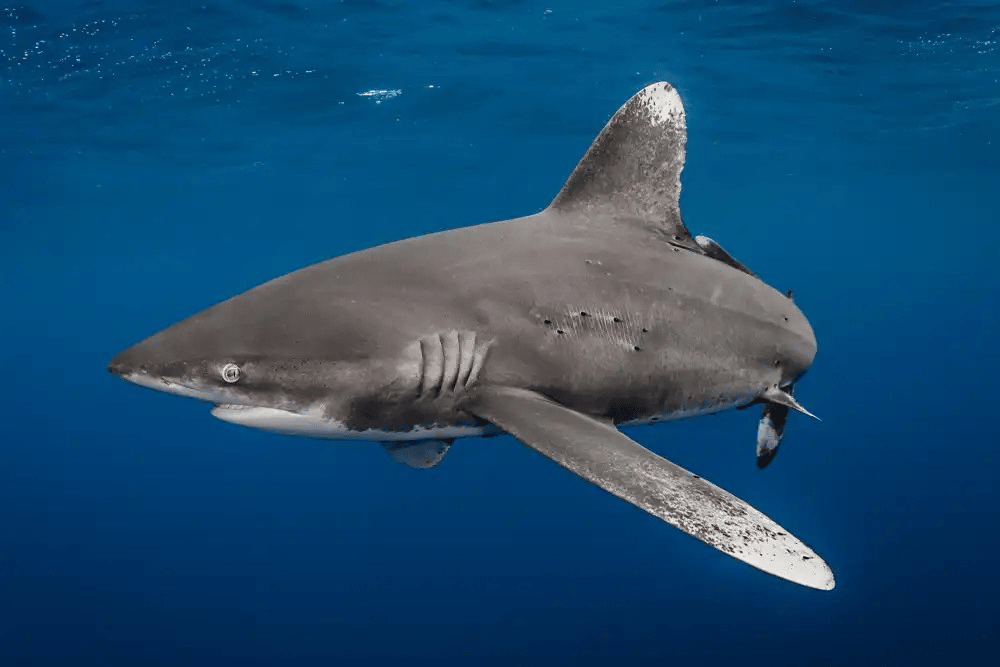
International trade ban triggers domestic protections under Fiji's Endangered and Protected Species Act. Photo credit: divemagazine.com
Oceanic Whitetip Sharks Gain Full Trade Protection
|
At CITES CoP20 in Samarkand, Uzbekistan, 185 countries voted to move oceanic whitetip sharks to Appendix I, marking the first time a shark species has received a complete international commercial trade ban. The proposal, led by Panama, received 83% support with 110 votes in favor. Fiji was among 13 nations speaking in favor of the upgrade during plenary sessions. The decision prohibits all international trade in oceanic whitetip products including fins, meat, and oil.
|
|
Oceanic whitetips have declined by 80-90% in just three generations due to fishing pressure and fin trade, with a 2019 stock assessment finding a 96% population decline from virgin levels in the Western and Central Pacific Ocean. Official trade records significantly underreport the actual illegal fin trade volumes. The species, which was previously on Appendix II allowing regulated trade, is listed as critically endangered on the IUCN Red List.
|
|
For Fiji, the Appendix I listing automatically triggers protections under the country's Endangered and Protected Species Act, which regulates trade, possession, and transportation of CITES-listed species. The Offshore Fisheries Management Act 2012 also restricts catch, sale, and possession of shark species on CITES Appendix I and II. Fiji implemented a shark fin import and export ban in 2019 and has been active in shark conservation since proposing the first Pacific Island trade restrictions in 2016. The CITES decision takes effect 90 days after CoP20 concludes on December 5.
|
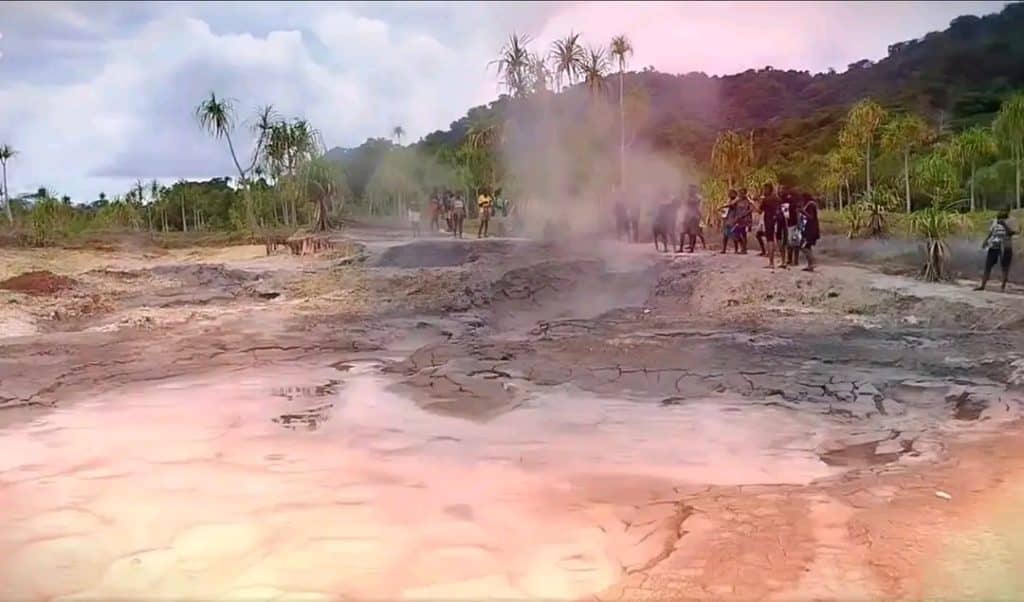
Nonda volcano system contains solfataras, hot springs, and boiling mud with calculated reservoir temperatures of 160°C. Photo credit: The Island Sun
Paraso Thermal Area on Vella Lavella Identified as Geothermal Energy Site - Solomon Islands
|
The Paraso thermal area on Vella Lavella Island in the Solomon Islands has been identified as a potential geothermal resource, according to research by the Pacific Islands Geothermal Energy Development Program. Located at the Nonda volcano, the youngest volcanic feature on the island, the Paraso site displays active solfataras, hot springs, and boiling mud pots. Surface temperatures at Paraso range from 38–63°C at nearby Nggurara, Kunjuku, Saikotulu and Koheka hot springs, but geochemical studies calculate the geothermometric equilibrium temperature at 160°C. W.F. Giggenbach documented the site in 1995 as a "difficult" geothermal system, noting challenges related to accessibility and the complex nature of the hydrothermal fluids. Nonda is a lava dome located within a well-preserved crater in the northern part of Vella Lavella, approximately 80 kilometers south-southwest of Maetambe volcano on Choiseul Island.
|
|
UK-based Stellae Energy signed a Memorandum of Understanding with the Solomon Islands Ministry of Mines, Energy, and Rural Electrification in 2023 to explore and develop geothermal power projects across the country. The company is targeting an initial 30-megawatt capacity development and released a pre-feasibility report in 2024. Volcanic geothermal systems in the Solomon Islands can potentially produce up to 100 megawatts of energy from individual volcanic structures with both shallow and deep resources. The Solomon Islands currently relies heavily on imported diesel fuel for electricity generation in Honiara and provincial centers, making geothermal development attractive for energy independence. In areas where local grids cannot handle the power generated, Stellae Energy plans to produce green hydrogen as an alternative energy carrier.
|
|
The Solomon Islands has seven Holocene volcanoes, with at least three historically active: Kavachi submarine volcano (currently erupting since 2021), Tinakula, and Savo. No historical eruptions have been confirmed from Nonda volcano, though local inhabitants reported smoke and explosive activity around the time of a major earthquake in 1959. Access to the Paraso site presents challenges that could affect project feasibility for supplying electricity to Honiara, located on Guadalcanal Island approximately 200 kilometers southeast of Vella Lavella. The Pacific Islands Geothermal Energy Development Program recommends drilling two 1,800-meter-deep slim holes at each prospective field to assess reservoir characteristics and confirm commercial viability.
|

Four Pacific nations finalize 2023-2033 funding arrangement worth $156.8 million for tuna access and development. Photo credit: Cook Islands News
Cook Islands Signs Updated US Treaty Payment Schedule at Manila Fisheries Commission
|
The Cook Islands, Federated States of Micronesia, Marshall Islands, and Tuvalu signed updated payment schedules for the US-Pacific Fisheries Treaty on the margins of the 22nd Western and Central Pacific Fisheries Commission session in Manila this week, allowing the Forum Fisheries Agency to process their annual allocations under the 2023-2033 agreement. MMR Secretary Pamela Maru signed the documentation, which has been renegotiated over the years since the treaty was first established in 1987. The US Treaty is the only multilateral tuna fisheries agreement of its kind globally, providing US purse seine vessels access to the exclusive economic zones of 17 FFA member countries that contain some of the healthiest tuna stocks in the world. Niue completed its signatures as the commission session concluded, bringing the total to five Pacific parties with finalized arrangements.
|
|
The decade-long payment schedule provides what Maru described as a critical and predictable source of public revenue for participating Pacific economies. Cook Islands fisheries generate approximately NZ$5.6 million annually from fishing licenses and access fees, contributing about 5 percent of government revenue. The treaty funds supplement domestic access revenues and support monitoring, control, and surveillance operations across the Cook Islands' exclusive economic zone. The US Treaty has operated continuously since 1987, though it went through annual statements of intent from 2013 to 2016 during renegotiations before a new multi-year agreement was reached in December 2016 worth up to $70 million in 2017. The 2023-2033 schedule continues this arrangement with updated terms.
|
|
The signing occurred during discussions at the WCPFC about regional tuna management challenges including climate change impacts, illegal fishing, and bycatch management. The Cook Islands also holds a separate Sustainable Fisheries Partnership Agreement with the European Union, signed in November 2024, allowing up to four EU vessels to fish for a maximum 7,000 metric tons of tuna annually. That agreement provides EUR 2.87 million ($3.1 million USD) over four years, with EUR 1.47 million for resource access and the remainder earmarked for local fishing sector development. Pacific Island countries collectively manage approximately one-third of the world's tuna catch.
|
Guam 3D Printing Project Adds Academic Component
First mainland U.S. university satellite campus on island will grant mechanical engineering degrees starting Fall 2026
|
ASTRO America has partnered with Colorado School of Mines and the University of Guam to establish a mechanical engineering degree program supporting the Guam Additive Materials & Manufacturing Accelerator. Students will complete their first two years at UOG and their final two years under Colorado School of Mines faculty teaching on-island, with all coursework focused on additive manufacturing and advanced production methods. The program allows students to earn a four-year mechanical engineering degree without leaving Guam, which has never been available on the island. Colorado School of Mines ranks in the top 40 public universities according to U.S. News & World Report and operates as an R1 research institution.
|
|
The education initiative complements the 8,000-square-foot GAMMA factory in Dededo, which broke ground in November and is expected to begin operations in early 2026. The facility will house three to four industrial-scale 3D printers producing metal and plastic components primarily for U.S. Navy submarines and ships. Current repair part wait times range from six months to two years due to Guam's location 6,000 miles west of the mainland, which the facility aims to reduce to two weeks. The Navy awarded ASTRO America an initial $5 million contract in 2024, with a potential $12 million expansion under evaluation to support curriculum development, laboratory infrastructure, equipment procurement, and student recruitment.
|
|
GAMMA currently employs six staff including five paid interns from local colleges and expects to grow to 15 employees within two years and approximately 100 within six years. The project originated from a 2020 economic diversification task force organized by Governor Lou Leon Guerrero and the Guam Chamber of Commerce, which commissioned ASTRO America to conduct feasibility studies in 2021-2023. Beyond defense applications, the facility is positioned to serve maintenance, repair, and overhaul needs for commercial ships and aircraft, potentially establishing Guam as a regional MRO hub similar to Singapore's role in Southeast Asia.
|
PRESENTED BY LANI MOKOSOI
FILMING IN FIJI?

|
I’ve spent more than two decades working in Fiji’s film industry, and I know how to get things done on the ground. Whether you need locations, approvals, transport, or crew, I’ll make sure your production runs seamlessly.
|
|
I’m here to take the stress out of filming in Fiji — so you can focus on the creative work.
|
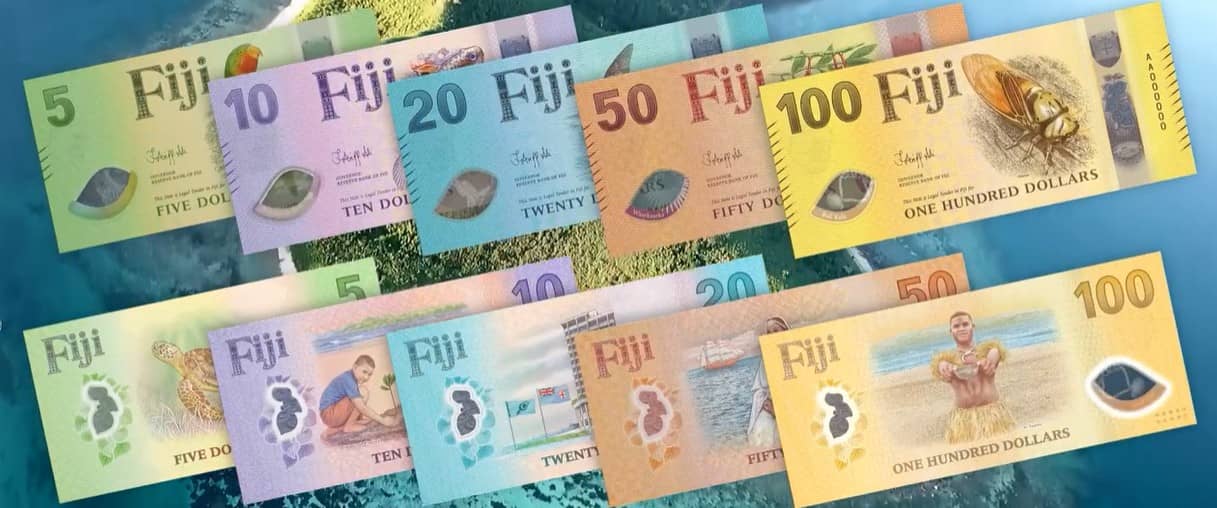
U.S. company Crane Currency prints 60 million notes featuring motion surface security stripe never successfully counterfeited. Photo credit: @USAmbSuva/X
Fiji Releases Polymer Banknotes with Anti-Counterfeiting Technology
|
The Reserve Bank of Fiji unveiled a complete polymer banknote series on December 2, marking the country's first partnership with Crane Currency, a Massachusetts-based company founded in 1801 that has supplied paper for U.S. currency since 1879. The new $5, $10, $20, $50, and $100 notes were printed at Crane's Malta facility for approximately $11 million and will enter circulation January 2, 2026. The series retains the front designs featuring endemic flora and fauna introduced in 2012, but adds new imagery on the reverse including an endangered green turtle, children planting mangroves, the Reserve Bank building, a Girmitiya woman with the Leonidas ship, and an iTaukei man holding kava.
|
|
The notes incorporate Crane's motion surface security technology, a micro-optic stripe visible from both sides that displays three-dimensional movement when tilted. According to Crane Currency president Dr. Aleta Richards, the feature has never been successfully counterfeited despite sophisticated criminal operations using equipment comparable to legitimate currency producers. The polymer substrate extends banknote life to 2.5 times longer than paper, reducing replacement costs while RBF Deputy Governor Esala Masitabua confirmed counterfeiting in Fiji remains negligible. Additional security measures include tactile lines for denominations (4, 6, 8, 10, and 12 lines respectively), tactile dots, fluorescent elements visible under UV light, microtext, shadow images, and clear windows displaying cultural artifacts.
|
|
The redesign process began in 2021 as part of RBF's policy to review currency every 10-12 years, with the last update occurring in 2012. RBF ordered 60 million notes including both circulation and numismatic editions. The central bank is offsetting production carbon emissions through a solar electrification project in Nakida Village, Naitasiri Province, and plans to recycle worn polymer notes into new products. Cash comprises $1.2 billion in circulation or 8% of Fiji's GDP, with recent studies showing it remains the primary payment method for daily expenses despite growth in digital transactions.
|
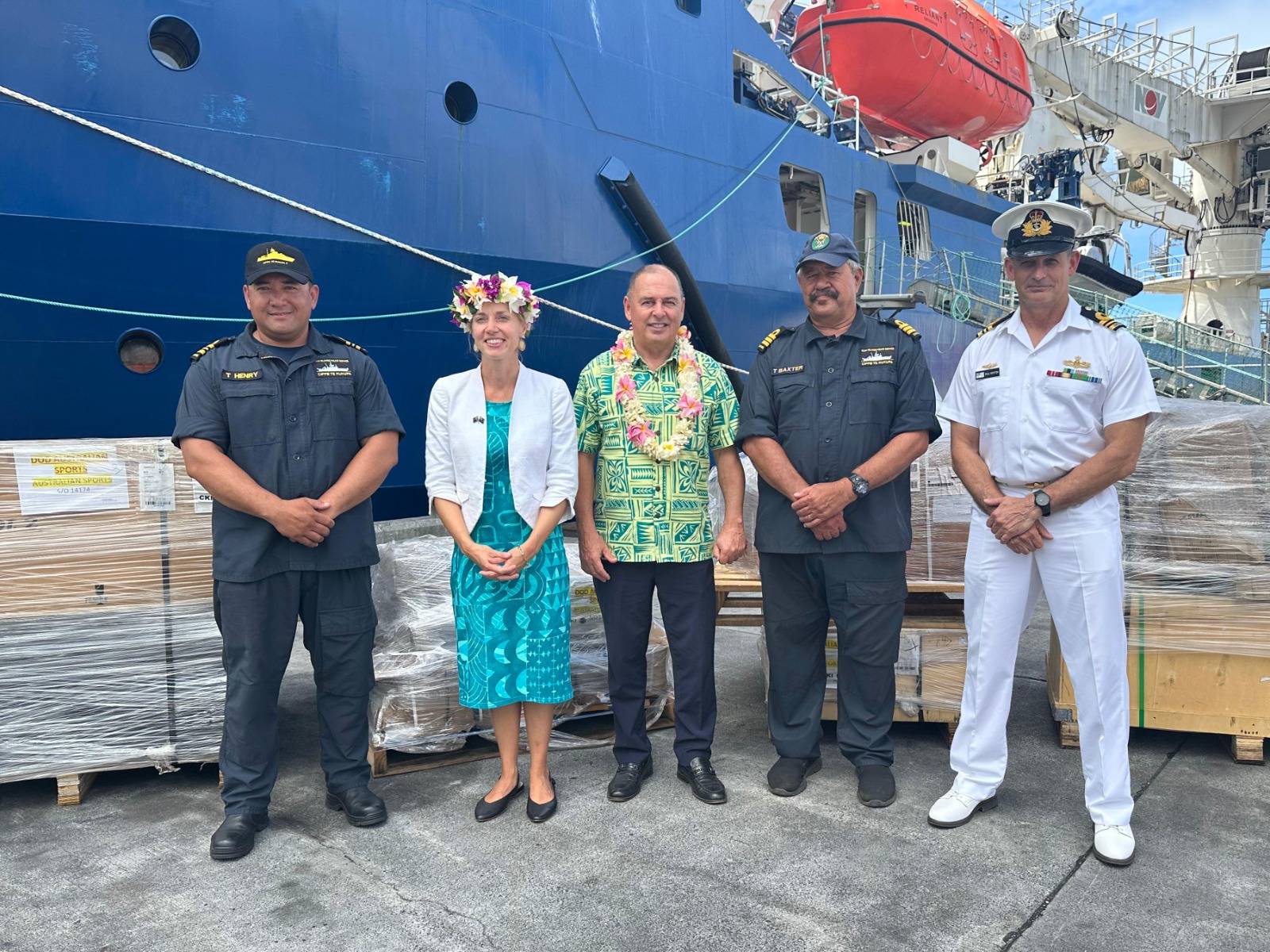
ADV Reliant handover supports enhanced Pacific Maritime Security Program agreement signed in October. Photo credit: Cook Islands News
Australia Delivers Patrol Boat Trailer and Maritime Centre Equipment to Cook Islands
|
Australian High Commissioner Susannah Hodson and Lieutenant Commander Paul Newton aboard ADV Reliant handed over equipment to Prime Minister Mark Brown at Avatiu Harbour on November 27, 2025, following a three-day port visit. The delivery included a trailer to improve deployment and storage of the Cook Islands Police Service's inflatable hull boat and gym equipment for the Maritime Surveillance Centre. ADV Reliant also provided maritime-focused first aid training for government agencies and ship tours showcasing its capabilities in humanitarian and disaster relief, health support, and search and rescue operations. The vessel, deployed up to 300 days annually using a multi-crew system, previously participated in Exercise Longreach 2025, simulating a maritime search and rescue operation following a disaster in Tuvalu.
|
|
The equipment delivery builds on an enhanced Memorandum of Understanding signed in October 2025 aboard Te Kukupa II, the Guardian-class patrol boat Australia delivered to the Cook Islands in June 2022. The agreement provides additional resources and funding to increase the operational availability of Te Kukupa II, which replaced the original Pacific Patrol Boat Te Kukupa that Australia delivered in 1989 and refurbished twice. The enhanced Pacific Maritime Security Program strengthens the Cook Islands' ability to protect its exclusive economic zone against threats including illegal fishing and transnational crime. Commissioner of Police Teokotai Joseph said the agreement strengthens the police service's ability to protect people, enforce laws, and maintain maritime domain integrity.
|
|
Australia's Pacific Maritime Security Program represents a $1.3 billion investment that includes replacing patrol boats with Guardian-class vessels, providing in-country advisors, training, and infrastructure upgrades. The surveillance component, coordinated by the Pacific Islands Forum Fisheries Agency and fully funded by Australia's Department of Defence, provides 1,400 hours of aerial surveillance annually across the Central and Western Pacific. The Cook Islands graduated to high-income status on January 1, 2020, becoming ineligible for Official Development Assistance. Australia allocated $8 million over four years in non-ODA funding from 2020-21 to 2023-24, continuing with $2 million annually from 2024-25 delivered through budget support and a $100,000 annual small community grants program.
|
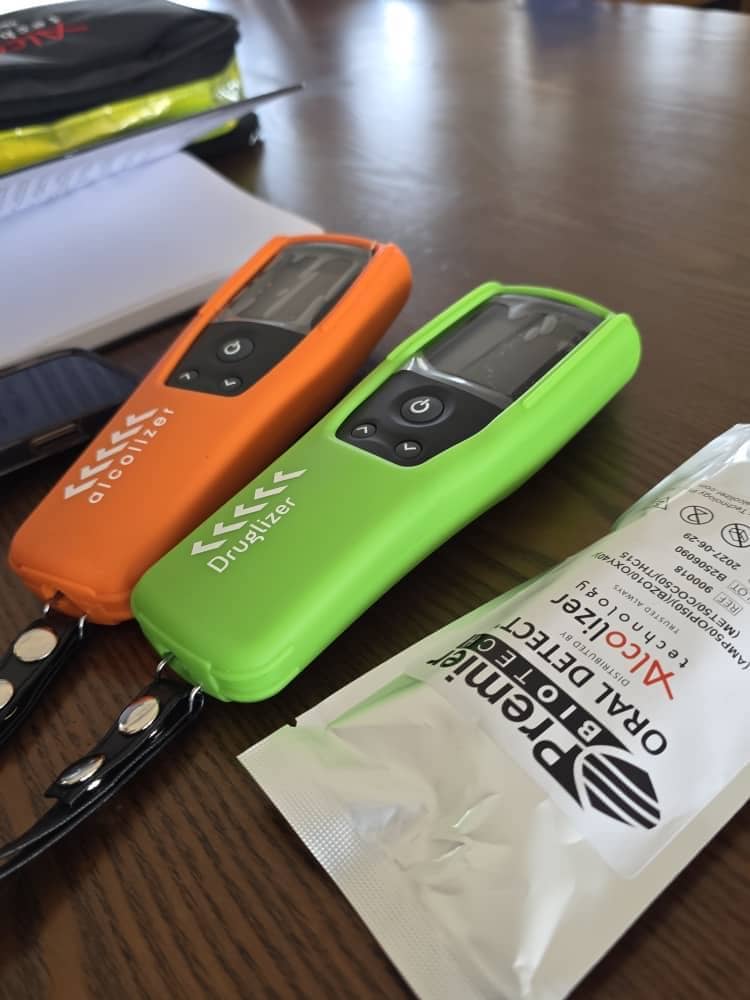
Internal Affairs officers will test all personnel in NCD and Central command starting next week. Photo Credit: PNG Haus Bung
PNG Police Begin Drug and Alcohol Testing After Year-Long Equipment Delay
|
Acting Assistant Commissioner Benjamin Turi confirmed that drug and alcohol testing equipment has arrived and will be implemented across the National Capital District and Central Provinces next week. Police Commissioner David Manning first launched the testing initiative in October 2023 after reports revealed officers were participating in the use and distribution of illicit drugs, particularly methamphetamine and cocaine, but the program was suspended due to lack of available equipment. The testing machines were demonstrated on two officers at the launch, both returning negative results. Internal Affairs Directorate officers will conduct testing on all police officers in the command, with compulsory tests required for police drivers suspected of being under the influence while on duty.
|
|
The testing responds to what Assistant Commissioner Anthony Wagambie Jr. described in 2023 as cocaine and methamphetamine use within the constabulary, calling it a dangerous situation for officers, their families, the public, and other police personnel. In April 2023, six officers tested positive for illicit substances during recruitment checks, and a video circulated showing officers allegedly smoking methamphetamine. In March 2024, two former police officers dismissed from the force were among 11 people arrested in Port Moresby for allegedly trafficking methamphetamine and possessing firearms and military body armor. Officers found using drugs or consuming alcohol will be dealt with according to disciplinary procedures, with reports provided to management to ensure discipline across the workforce.
|
|
The Royal Papua New Guinea Constabulary has approximately 4,800 constables serving a population of seven million people. The Drug and Alcohol Policy was officially launched by Internal Security Minister Peter Tsiamalili Jr. and Commissioner Manning in October 2023, establishing mandatory checks on police personnel both on and off duty to maintain professional standards and public confidence in the force.
|
Vanuatu Audience Survey Reveals Digital Divide in Media Access
Ni-Vanuatu want more news but rural infrastructure gaps persist, BBC Media Action study finds
|
A six-month BBC Media Action study surveying 1,073 adults across all provinces in March 2025 has revealed that while 95% of Ni-Vanuatu now have mobile phone access, only 46% regularly use the internet. The research, conducted by Tebbutt Research in partnership with the Vanuatu Association of Non-Governmental Organisations, found audiences want more news content but are frustrated by repetition, with many remote areas still unable to reliably access information due to poor network infrastructure. The survey covered Shefa, Sanma, and Torba provinces and was launched on November 12, 2025, by British High Commissioner Nicolette Brent.
|
|
Digital media has become the most common source for news and entertainment, with Facebook, Messenger, and YouTube as the top platforms, but trust remains low—only one in four respondents trust social media as a reliable news source. Concerns about misinformation and unverified posts dominated responses. In contrast, Radio Vanuatu and the Vanuatu Daily Post were rated significantly higher in trustworthiness, with radio remaining critical for rural communities during weather disruptions or network outages. BBC Media Action Project Director Dipak Bhattarai noted that remote areas lack trustworthy signals due to weather and infrastructure problems, making radio, TV, and social media connections poor.
|
PRESENTED BY VONU STUDIOS
Children's Book: Vonu and the Druas Play Hide and Seek

|
Join Vonu the turtle and the stingray twins, the Druas Vai and Fai, in an exciting game of hide and seek! A heartwarming story filled with fun and adventure, perfect for young readers. Get your copy today!
|
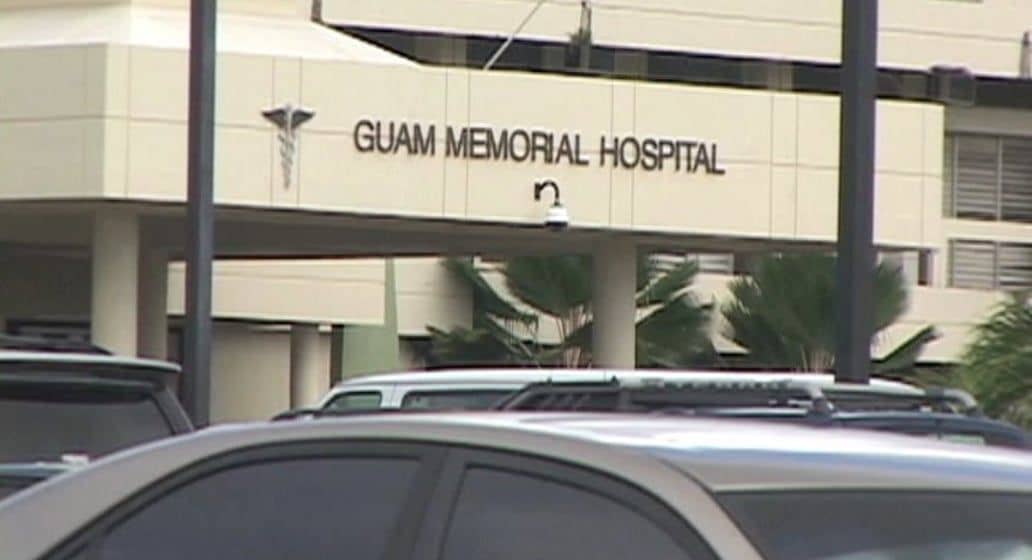
Hospital bypasses political gridlock with direct appeal for volunteer labor and community donations. Photo credit: Kuam News
Guam Memorial Hospital Launches Community Volunteer Program
|
Guam Memorial Hospital has launched "Our Hospital. Our Mission. Our Island," a volunteer recruitment initiative seeking hands-on community support for beautification, campus cleanup, and facility repairs. The program targets organizations and community groups capable of working safely within an active hospital environment. CEO Dr. Joleen Aguon described the initiative as abandoning hope for consistent government support after decades of political deadlock over hospital funding. The move follows interagency cleanup efforts in October when Guam Police Department, Department of Public Works, and Guam Fire Department volunteers cleared exterior debris and overgrowth following electrical fires in August.
|
|
GMH faces a $21.9 million operating budget shortfall for fiscal year 2026 on top of $29.3 million needed for capital improvements. The hospital owes $4 million to travel nurse agencies, with NuWest suspending new placements due to nonpayment, and carries a $1.16 million debt to Guam Power Authority with the last payment made in May. The facility operates with Medicare reimbursement rates that fail to cover costs while treating 31 patients currently unable to pay their bills. Hospital officials project that without additional funding, they will close beds, extend emergency room wait times, and cut vendor payments for pharmaceuticals and medical equipment maintenance. The obstetrics department operates with three rotating physicians and nurse-midwives averaging 70 years old working 24-hour on-call shifts, while the hospital has been unable to recruit qualified candidates due to budget constraints.
|
|
The building itself continues to deteriorate despite $127 million in subsidies over the past decade. An August electrical fire evacuated the pediatric ward after power fluctuations ignited a breaker unit on the third floor and burned out an HVAC motor on the fourth floor. Officials testified the aging electrical panel lacks backup systems and could force complete hospital evacuation if it fails, with replacement requiring six months minimum. GMH recently installed a 265-ton chiller and condenser using $40 million in supplemental funding to address mold and humidity from the failing air conditioning system, and broke ground on roof and envelope restoration to harden the structure against typhoons. Governor Lou Leon Guerrero has committed $104 million in American Rescue Plan funds toward a proposed $750 million replacement hospital in Mangilao with 250-300 beds, though no construction timeline has been established.
|
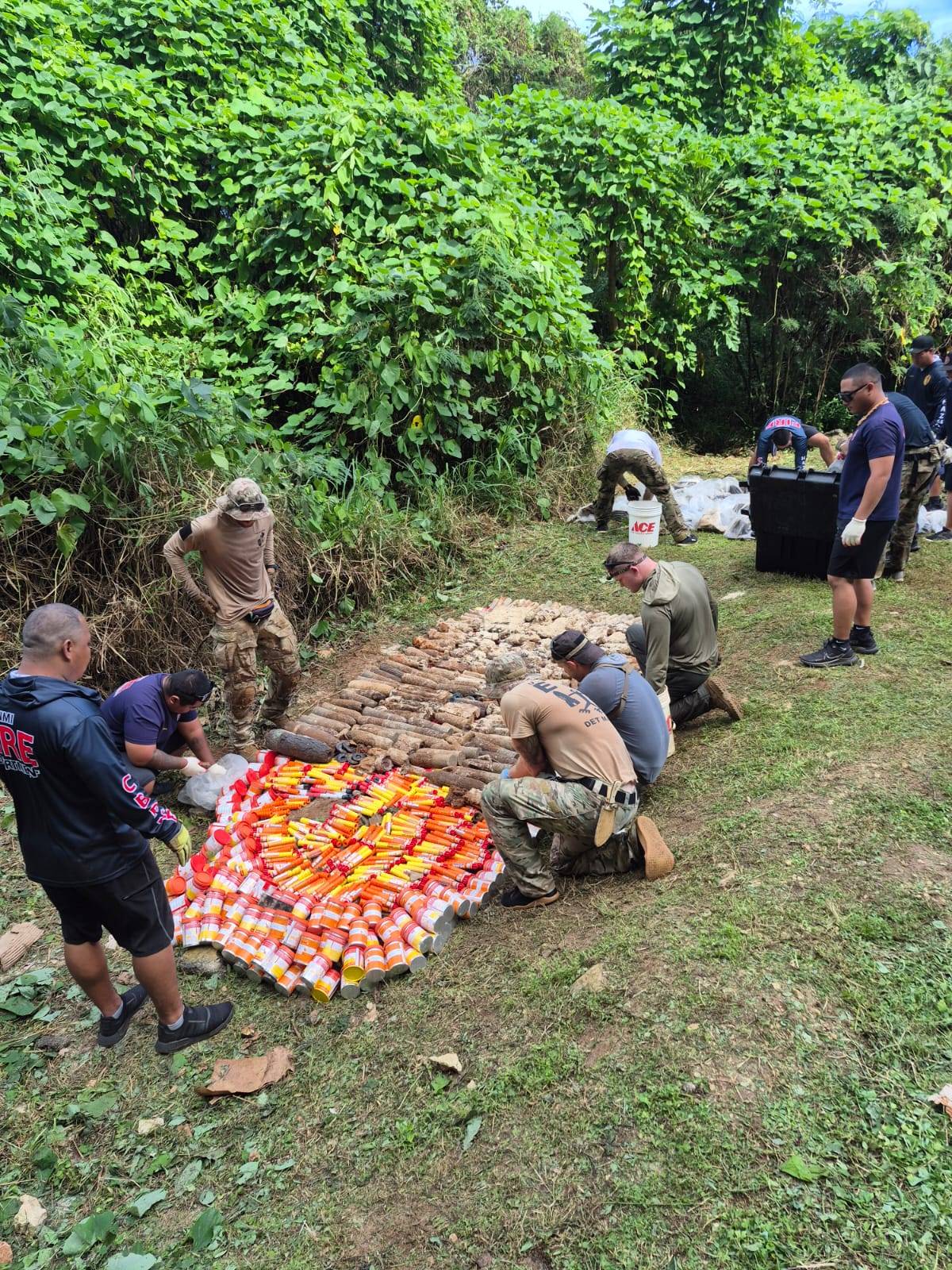
Erosion at American Memorial Park exposed munitions from hidden bunker after Tropical Storm Krosa. Photo credit: Marianas Variety
Saipan Detonates One Ton of WWII Ordnance Collected Over Past Year - CNMI
|
The Department of Fire and Emergency Medical Services and US Navy Explosive Ordnance Disposal Detachment Marianasdetonated approximately one ton of unexploded ordnance at the Marpi bomb pit on December 4, 2025. The cache included WWII-era mortar rounds, artillery shells, hand grenades, and expired flares from a local establishment, collected over the past year from multiple sites across Saipan. DFEMS public information officer Robert Mojica said residents frequently discover unexploded ordnance when digging around homes or farms, with many of the recently detonated munitions exposed after Tropical Storm Krosa hit Saipan in late July, causing severe coastal erosion at American Memorial Park. The storm washed away decades of sand near Micro Beach, revealing what authorities suspect was a hidden WWII bunker containing land mines, mortars, artillery rounds, grenades, and tens of thousands of small arms ammunition.
|
|
The shoreline fronting Crowne Plaza Resort Saipan, Marianas Beach Resort, and Micro Beach has lost more than 60 feet of beach width from 2019 to 2024, according to Mary Fem Urena, coastal resources planner at the Bureau of Environmental and Coastal Quality. The Battle of Saipan from June 15 to July 9, 1944, resulted in 24,000 American casualties and left the island littered with ordnance. World War II military operations left millions of pounds of unexploded munitions across the Commonwealth of the Northern Mariana Islands—some fired but failed to detonate, others abandoned after the war. The EPA reports these munitions slowly degrade into the environment and can detonate if disturbed, dispersing chemicals to air, soil, surface water, sediment, and groundwater.
|
|
The CNMI operates a permitted hazardous waste treatment unit at Marpi Point under a Remedial Action Plan framework established through the Resource Conservation and Recovery Act. Mojica urged residents to call 911 immediately if they encounter unexploded ordnance, provide location and description, and allow authorities to safely retrieve and transport items to the bomb pit. Unexploded bombs, artillery shells, grenades, and bullets are found routinely across the islands. American Memorial Park, established August 18, 1978, honors the 5,200 US servicemen and more than 900 Chamorro and Carolinian civilians who died during the Marianas Campaign battles of Saipan, Tinian, and the Philippine Sea.
|
Vanuatu Finalizes Kava Protection Standards in GI Workshop
Two-day session establishes production rules, traceability system, and labelling requirements for export certification
|
The Vanuatu Intellectual Property Office concluded the second day of its national validation workshop on November 18, completing the book of specifications for a geographical indication on Vanuatu kava. The document establishes binding standards for planting materials, cultivation practices, pest management, harvesting protocols, and product quality parameters for both green and dried kava. Farmers, exporters, technical specialists, and government representatives attended the session, which defined eligible kava varieties, propagation methods, weed control requirements, and acceptable pest control measures that preserve product purity. The specifications also set standardized harvesting times, handling methods, drying practices, and storage conditions across the industry.
|
|
The workshop established a traceability system to track kava from farm to export, addressing a concern identified by Timothy Tumukon, Director General of the Ministry of Agriculture, who noted in March 2024 that Vanuatu exported over 100 tonnes of kava to China in December 2023 for kavalactone extraction and re-export to the United States. The system aims to strengthen transparency and ensure benefits flow to farmers. Participants also agreed on sanctions for non-compliance and proposed labelling requirements to identify authentic Vanuatu GI-certified kava in international markets. John Huri, kava consultant at VIPO, said the GI will strengthen market access while protecting kava's identity and quality. The session included a site visit to Rose Merry's kava processing facility at Holen tank, where she demonstrated export preparation methods and emphasized hygiene standards.
|
|
No Pacific country has yet passed geographical indication legislation, though drafts are in progress across the region. Australia imported approximately 130 tonnes of kava from Pacific suppliers in the first 10 months after easing commercial import restrictions in 2021. The specifications will undergo further consultations before VIPO submits the formal GI application to protect Vanuatu kava varieties and the kava name from unauthorized use in global markets.
|
SPOTLIGHT
WCPFC Adopts South Pacific Albacore Management Procedure After Decade of Negotiations
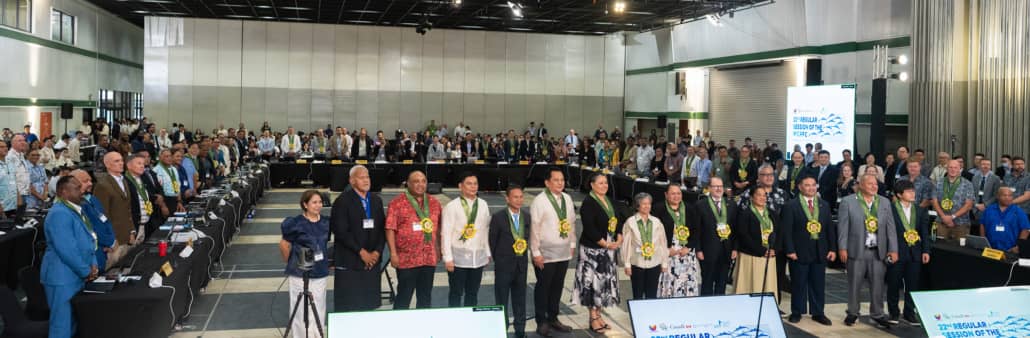 Commission adopts South Pacific albacore harvest strategy after decade of deadlock, but transshipment reform remains stalled. Photo credit: Pacific Islands Forum Fisheries Agency (FFA)
|
The Western and Central Pacific Fisheries Commission concluded its 22nd annual meeting in Manila December 6 with adoption of the first management procedure for South Pacific albacore, a $1 billion fishery central to Pacific Island economies. Members settled on Harvest Control Rule 7 after Chinese Taipei and China dropped their preference for HCR10, which would have permitted higher catch limits. The deal came after Fiji warned that HCR10 would "amputate" domestic fisheries by tightening fish supply to processors, cutting employment, and undermining fleet viability. Chinese Taipei, which will face the largest fleet impact under HCR7, agreed not to block consensus "in the spirit of cooperation" while urging members to consider its operational difficulties during implementation. The management procedure automatically adjusts catch or effort limits based on stock health, ending two decades of management that failed to stabilize the fishery or improve catch rates.
|
|
WCPFC Chair Dr. Josie Tamate called the albacore adoption her top priority and credited Forum Fisheries Agency members, particularly southern Pacific states, for years of preparation. Cook Islands representative thanked Chinese Taipei for its flexibility and committed FFA members to work closely with the delegation on finalizing implementation measures in 2026. The commission manages fisheries worth $21 billion annually representing over half the global tuna catch. The albacore fishery remains within safe biological limits according to scientific assessments, though stock depletion sits near the interim target reference point with recent biomass showing no improvement over 20 years. The adoption enables South Pacific longline operations to maintain Marine Stewardship Council ecolabels, which major retailers and suppliers require for market access.
|
|
The commission also agreed to terms of reference and reporting templates for Article 30 reviews, fulfilling a longstanding demand from small island developing states that new conservation measures avoid placing disproportionate burdens on Pacific countries. Article 30 of the WCPFC Convention recognizes that management decisions can disproportionately affect SIDS and requires the commission to minimize those impacts. Marshall Islands Minister Anthony M. Muller told delegates that Article 30 is "the platform upon which our engagement in this Commission stands" and stressed obligations on capacity-building, technology transfer, and safeguarding SIDS development rights.
|
|
Transshipment reform saw no progress despite unified calls from Pacific members to end high seas transfers by longline vessels. Marshall Islands Marine Resources Authority Director Glen Joseph has demanded port-based operations since 2008, noting the commission has a legal obligation under its founding convention to provide economic incentives to small island developing states. Sharks Pacific Policy Director Bubba Cook told delegates that some members treat high seas transshipment as a "blanket entitlement" rather than the narrow exception intended when Conservation and Management Measure 2009-06 was adopted. High seas transshipments transfer nearly 1 million metric tons of fish worth $6.5 billion annually in the western and central Pacific with limited observer coverage, creating data gaps that compromise stock assessments.
|
|
Cook backed statements from the Marshall Islands, Forum Fisheries Agency, and Parties to the Nauru Agreement in calling for an outright ban, citing commission reports acknowledging "substantial data deficiencies, unverified reporting, and potential unreported transshipments." The Indonesian Migrant Workers Union echoed demands to end the practice, warning of ongoing labor abuses enabled by vessels staying at sea for months without scrutiny. While purse seiners must transship in port with full monitoring under existing rules, longline fleets continue transferring catches at sea where verification is minimal. Chair Tamate confirmed current management measures remain in force, which ban high seas transshipment except where members determine it is impracticable for certain vessels to operate without at-sea transfers. The commission disbanded its transshipment working group at WCPFC21 in Fiji after years without resolution.
|
|
The Pew Charitable Trusts and WWF Pacific welcomed the albacore adoption but emphasized implementation will be critical. WWF Fisheries Conservation Officer Seremaia Tuqiri noted it took over 10 years to reach agreement and said the decision balances development aspirations, food security, and long-term stock stability. The commission will finalize implementation measures including effort allocation and monitoring requirements through an intersessional working group in 2026, with formal adoption expected at WCPFC23. Tamate stated the commission's ultimate goal is maintaining healthy stock status, noting it is better to sustain fisheries than rebuild after collapse.
|
OCEANIANS MAKING WAVES
Fijian Graduate Becomes First Pacific Islander in European Islands Sustainability Program
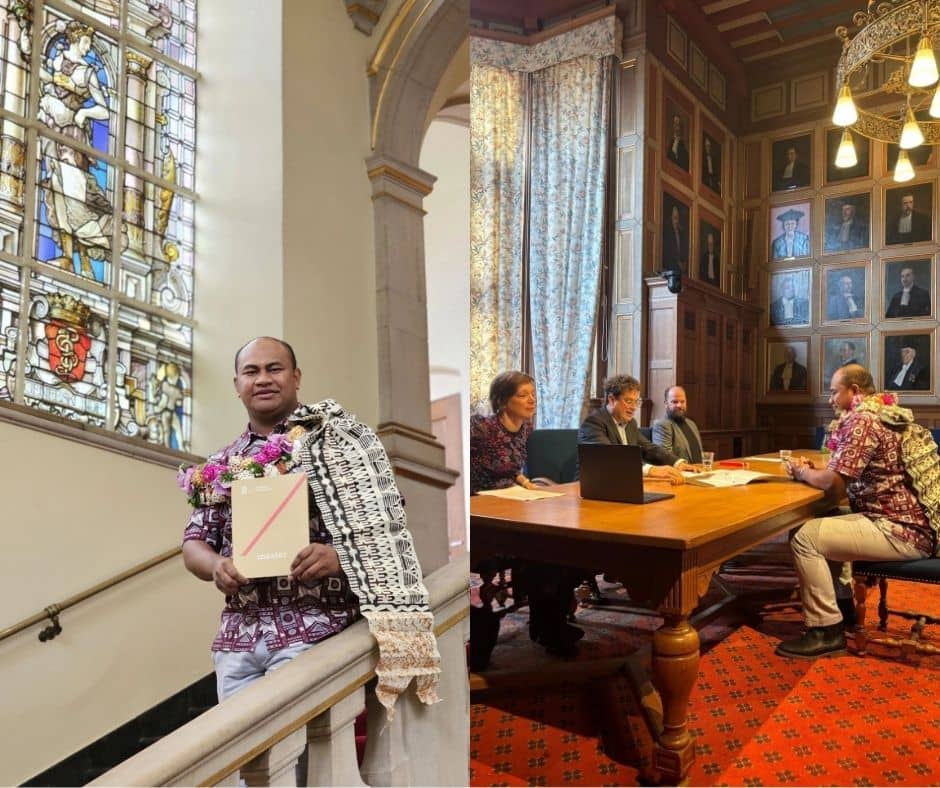 Gabriel Mara completes dual master's degrees through Erasmus Mundus program spanning four European universities. Photo credit: Gabriel Mara / LinkedIn
|
Gabriel S.J. Mara has graduated from the Erasmus Mundus Joint Master Programme in Islands and Sustainability, becoming the first Pacific Islander and Fijian to complete the program at the University of Groningen. The 29-year-old climate negotiator earned dual master's degrees in Spatial Sciences and Sustainable Fisheries and Resource Management through the ISLANDS program, which rotates students across four European universities: the University of Groningen in the Netherlands, the University of the Aegean in Greece, the University of Iceland, and the University of Las Palmas de Gran Canaria in Spain. The program received €3.6 million in funding from the European Union when it launched in 2021 and focuses on addressing economic, social, and environmental marginalization facing island communities globally.
|
|
The ISLANDS program requires students to spend their first semester at Groningen studying research methods and sustainability concepts before moving to an island-based partner university for regional fieldwork and policy analysis. Students return to Groningen for advanced research training before completing their master's thesis at one of the partner institutions in their second year. Graduates receive double degrees acknowledging completion of the Erasmus Mundus joint program. The curriculum emphasizes comparative research across different island systems, examining climate adaptation, resource management, tourism impacts, and island governance through both European and broader island contexts.
|
|
Mara previously served as Fiji's adaptation negotiator and currently coordinates for the Group of 77 and China at UN climate negotiations, the only Pacific Islander in that role. He holds undergraduate and postgraduate degrees in marine science from the University of the South Pacific and has worked on marine protected area economic assessments presented to the 2020 Convention on Biological Diversity. His research background includes work with locally managed marine areas in Fiji and community-based coastal resource management. Mara is also a Yale Fellow, SLYCAN Trust Fellow, Sasakawa Peace Foundation Youth member, and Young Pacific Leader alumnus.
|
SPORTS
PNGFA Adds Three Regional Associations, Renames Women's Team "PNG Bilums"
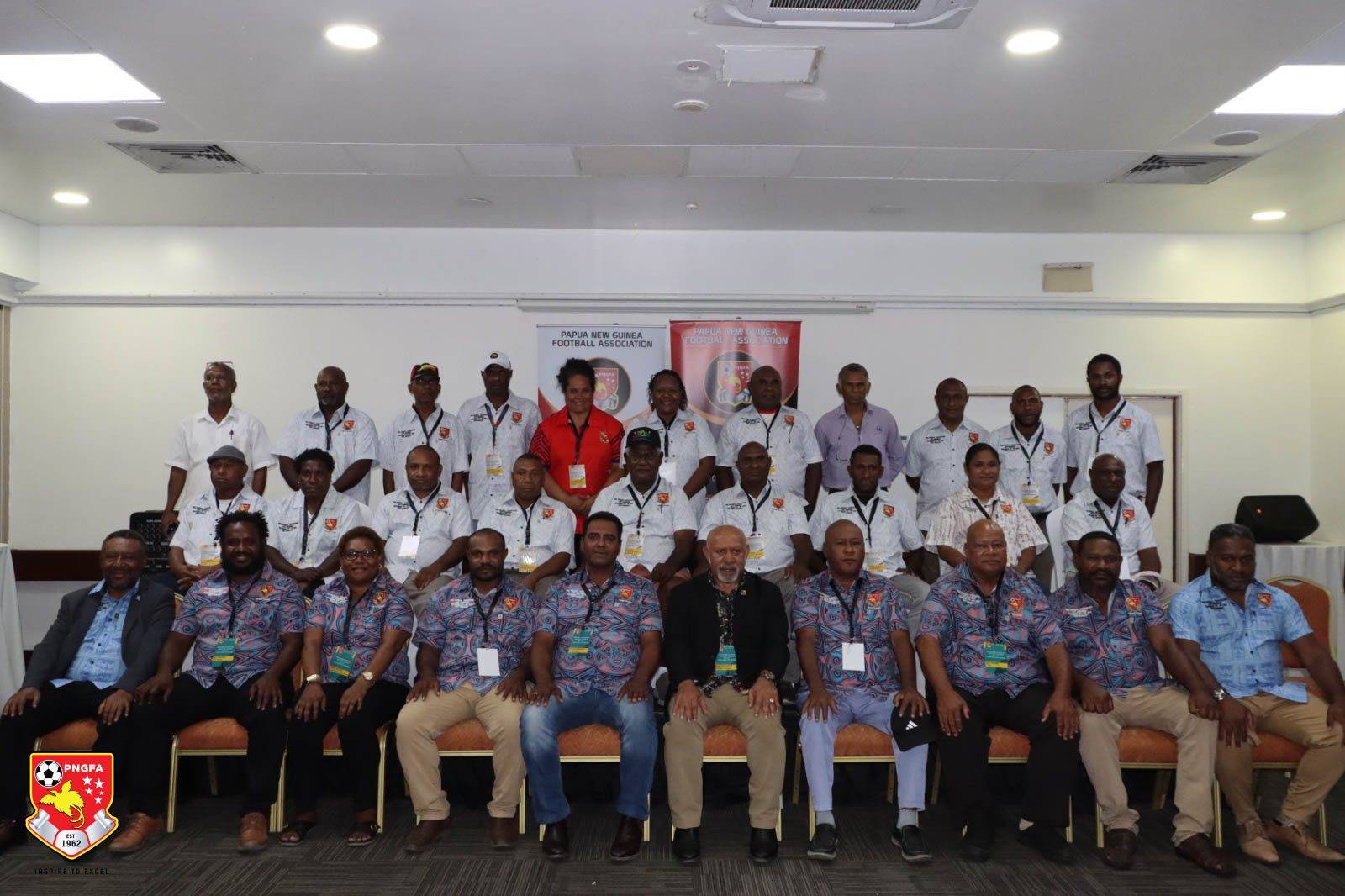 Congress approves Alotau, Wewak, and Vanimo memberships and establishes judicial committees. Photo credit: PNG Haus Bung
|
The Papua New Guinea Football Association concluded its 20th Ordinary Congress on December 5, 2025, granting full membership to three regional associations: Alotau Soccer Association from Milne Bay Province, Wewak Soccer Association from East Sepik Province, and Vanimo Soccer Association from West Sepik Province. The associations met PNGFA statute requirements for sustained football activity and administrative capacity, expanding the federation's presence into provinces that previously lacked formal representation. Congress also confirmed the appointment of three judicial bodies—the Appeals Committee, Ethics Committee, and Disciplinary Committee—to handle matters relating to ethics, disciplinary actions, and appeals in accordance with FIFA and OFC governance standards.
|
|
The women's national team received a new official name, replacing "Lakatois" with "PNG Bilums." The bilum is a handwoven string bag made exclusively by Papua New Guinean women, with the word meaning "womb" in Tok Pisin. The bags are used to carry babies, firewood, and food, and serve as ceremonial gifts that establish relationships and signify wealth and social position. Different bilum patterns tell stories about women's lives, including the diamond pattern that marks a girl's transition into womanhood and the skin pig pattern that reflects unequal gender status in traditional society. The World Intellectual Property Organization reports that 80% of bilum weavers are illiterate with limited education, many are single mothers with limited access to healthcare, and bilum weaving provides their only entry into the formal economy.
|
|
The PNG women's team, which won the 2022 OFC Women's Nations Cup and reached the 2023 World Cup inter-confederation playoffs, finished as runners-up in the 2025 OFC Women's Nations Cup after losing 2-3 to Solomon Islands in extra time on July 19, 2025. The team is currently ranked 60th in FIFA's Women's World Ranking. PNGFA will integrate the new Bilums name into all competitions, communications, branding, and team representation starting immediately.
|
|
|
Help Us Improve The Oceanian
We’d love to hear your thoughts—reply to this email and tell us what you enjoyed or want more of.
|
QUICK TAKES
- The Association of Tahiti and Islands Publishers has launched the third edition of "Père Lecteur" (Father Reader), distributing 1,050 books to children and teenagers aged 3-18 across all of French Polynesia's archipelagos, including remote islands like Takume, Rapa, and Tahuata. Supported by the Ministry of Education and Culture and the High Commission's Cultural Affairs Mission, the Christmas initiative aims to promote access to local literature by offering books from local publishing houses, with recipients selected by lottery through schools and municipalities, and 50 additional books collected through donations at the Papeete book fair.
|
FUNDING OPPORTUNITIES
-
NZ Film Industry Development Funding
|
The New Zealand Film Commission (NZFC)
is offering Industry Development Funding to support New Zealand screen sector organisations, companies, or collectives in delivering programmes that develop craft and practice within the film industry.
|
|
Key Details:
-
Purpose: To foster skill development, project initiatives, and talent within the New Zealand film sector.
-
Eligibility: Open to New Zealand-based screen organisations, companies, or collectives registered in New Zealand.
Funding Strands:
-
Strand 2 (up to $30,000): Applications opened on Monday, July 14, 2025 and remain open until June 30, 2026, or until funds are exhausted.
How to Apply: Applications are submitted via the NZFC's online application portal.
For full details on application criteria and guidelines, please visit the official NZFC website:
Industry Development Funding.
|
Was this email forwarded to you? Sign up here:
|
|